For many families, the hardest part of finding a life partner is simply knowing where to start. Relatives offer opinions, friends share success stories, and the number of options can feel overwhelming. A clear process removes most of that stress. This checklist walks you through the search in the order most families experience it.
Step 1: Confirm you are ready
Before creating a profile or meeting anyone, ask yourself honestly whether you want marriage now or are responding to outside pressure. Think about your career stage, finances, emotional readiness and willingness to share your life with another person. A search that begins from genuine readiness is calmer and produces better decisions.
Step 2: Separate must-haves from nice-to-haves
Write down what you truly need in a partner and what you would merely like. Must-haves are usually about values, attitude to family, honesty, willingness to communicate and basic life goals such as where to live and whether to have children. Nice-to-haves might include height, a specific profession or a particular city. Keep the must-have list short, ideally five or six points. A long list of rigid conditions shrinks your options without improving compatibility.
Step 3: Involve family in a defined way
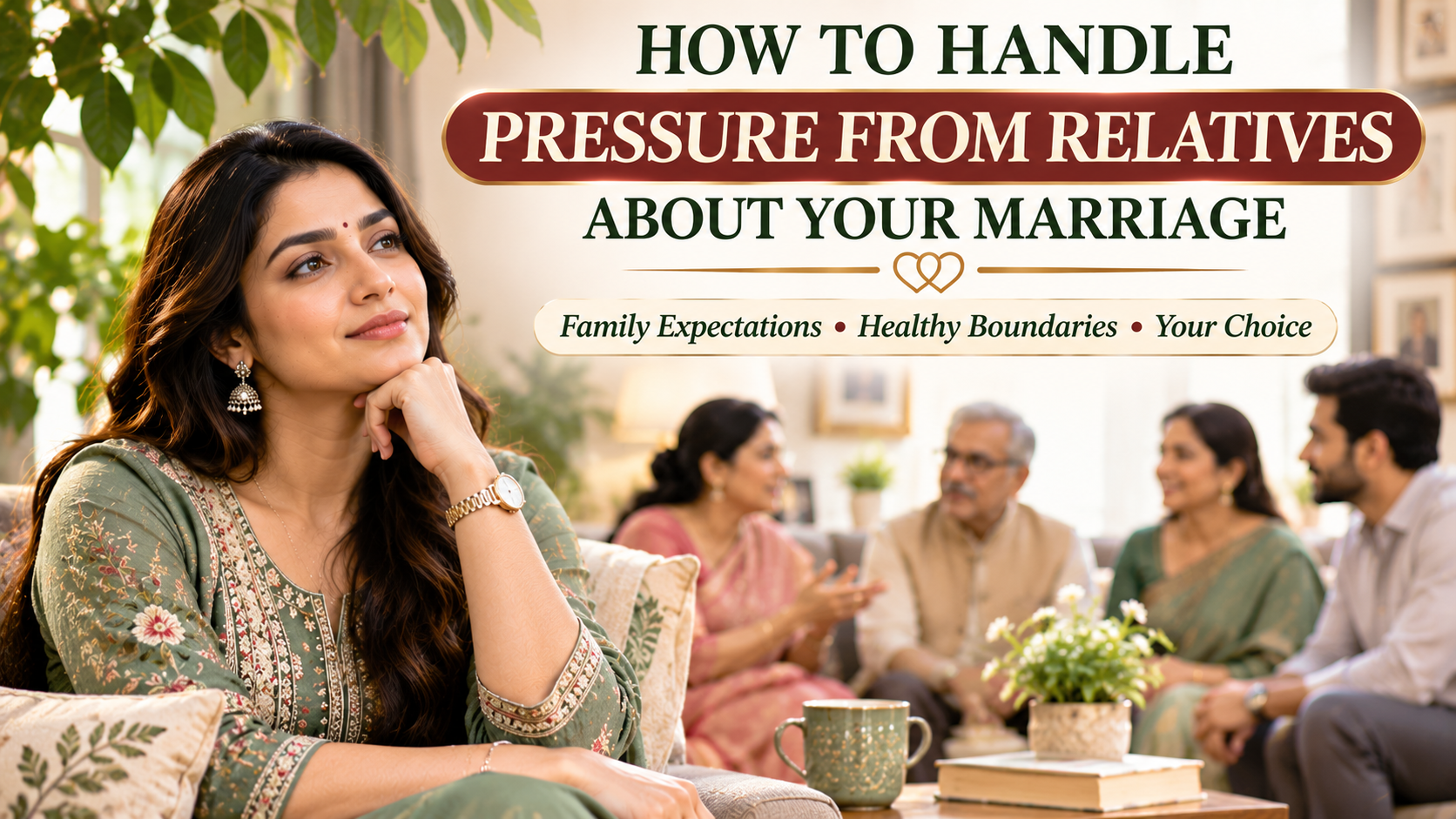
In most Indian households, marriage involves parents and sometimes extended family. Decide early who is part of the decision and in what role. Parents may handle the first screening of profiles while you hold the final say, or you may search yourself and keep parents informed. Agreeing on roles at the start prevents misunderstandings later.
Step 4: Prepare your profile and documents
Write an honest, well-organised profile or biodata with clear recent photographs. Keep basic documents ready: proof of identity, educational certificates, employment details and, if your family follows it, a verified kundli. Share only what is necessary in the early stage and hold back sensitive details such as your full address or identity numbers.
Step 5: Choose your search channels
Most people combine several routes: online matrimony platforms, community networks, family introductions and trusted friends. Each has strengths. Online platforms give reach, community networks give familiarity, and personal introductions often come with built-in trust. Whichever you use, avoid paying large amounts upfront and read the terms before subscribing.
Step 6: Shortlist and start conversations
Review profiles against your must-have list first and your preferences second. Shortlist a small number of matches rather than contacting dozens at once. Begin with a polite message or a call between families, then move to a few direct conversations. Ask about values, daily routines, career plans, family expectations and long-term goals. Notice how a person responds to disagreement, because that tells you more than a polished profile.
Step 7: Meet and verify
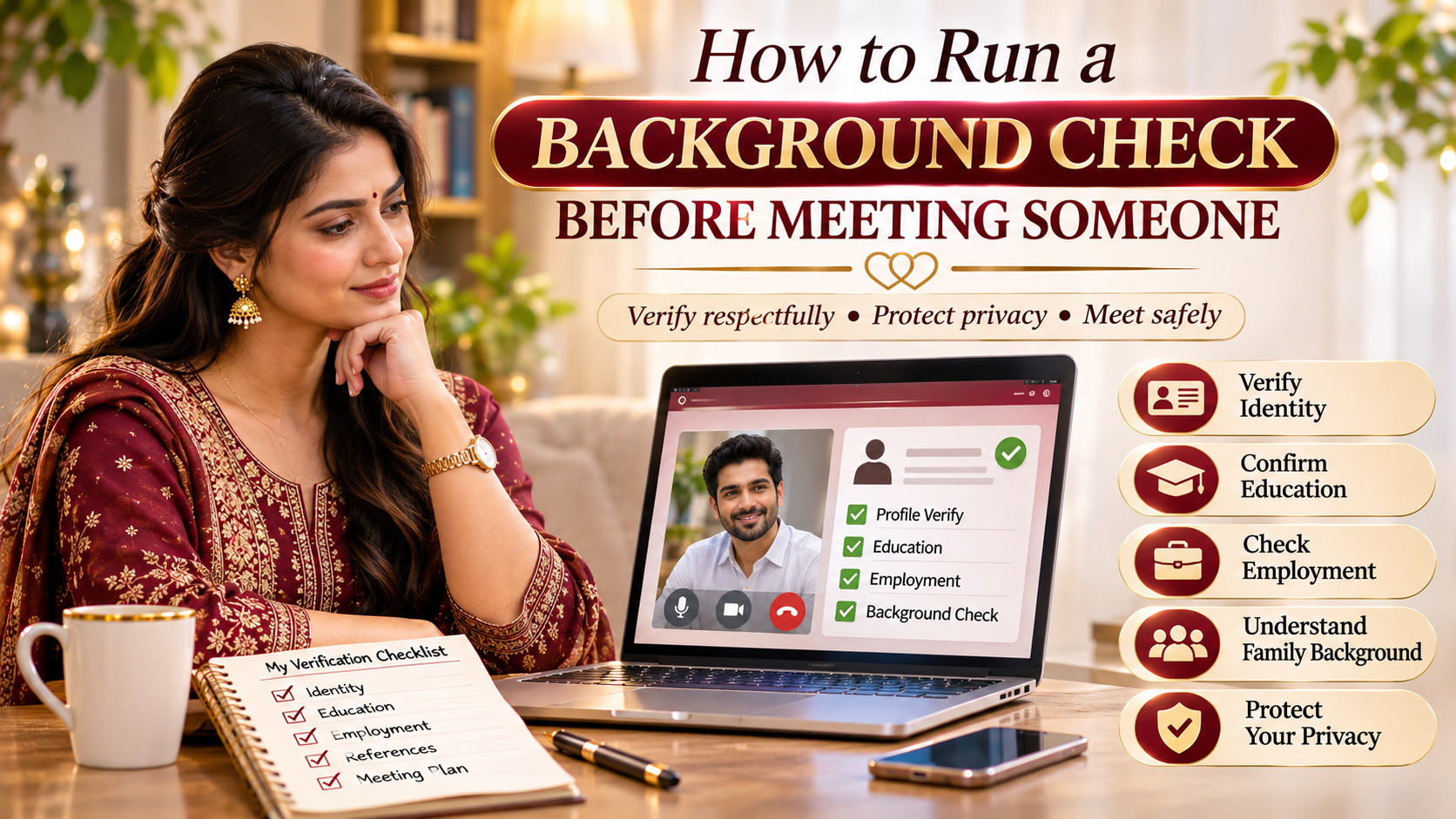
Meet in a public place, ideally with a family member aware of the plan. Before getting serious, verify key facts such as employment, education, marital status and family background through reliable and respectful means. Do not send money, gifts or financial information to anyone you have not met and verified.
Step 8: Decide with a timeline
Open-ended searches lead to fatigue. Give yourself a realistic window, for example six to twelve months, and review progress every few weeks. When you meet someone who fits your must-haves and with whom conversation feels honest and comfortable, allow the relationship to move forward. Waiting for a perfect match usually means waiting indefinitely.
Common mistakes to avoid
- Rejecting good matches over minor preferences
- Letting social comparison drive decisions
- Hiding important facts such as health, past marriages or financial obligations
- Rushing into commitment because of a deadline
- Ignoring your own instincts when something feels wrong
Final thoughts
A good partner search is organised, honest and patient. With clear priorities, defined family roles and careful verification, you can move from confusion to a confident decision. Treat the process as a thoughtful conversation between two people and two families, not a race.
Frequently asked questions
1. At what age should I start looking for a life partner?
There is no fixed age. Start when you feel emotionally and financially ready and are open to sharing your life with someone. Pressure from age-related expectations rarely leads to good decisions.
2. How long does a typical marriage search take?
It varies widely. Some people find a match within a few months, while others take a year or more. A defined timeline and realistic expectations help keep the process manageable.
3. Should I use an online platform or rely on family networks?
Many people use both. Online platforms widen your options, while family and community networks add familiarity and trust. Verify every match regardless of how you found them.
4. How many matches should I shortlist at one time?
A small number, typically three to five, works best. It lets you give each conversation proper attention instead of spreading yourself thin.
5. What should I do if my family and I disagree on a match?
Have an open conversation about the specific concerns. Listen to experience, share your reasons and look for a compromise. If needed, involve a trusted elder or counsellor to help.