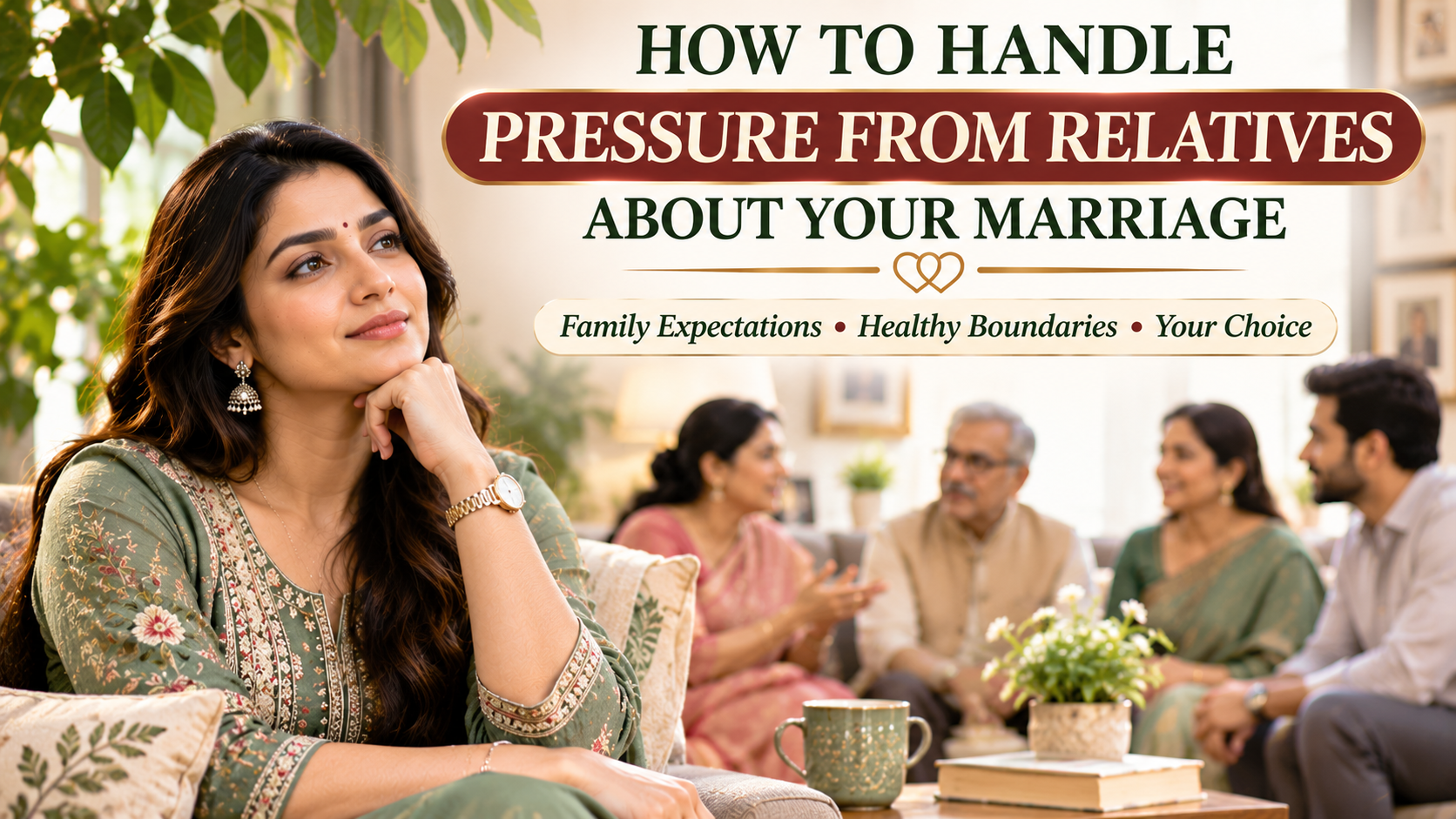
When Family Concern Becomes Marriage Pressure
Marriage is an important milestone in many Indian families. Parents, grandparents, uncles, aunts, and other relatives often take a genuine interest in when someone plans to marry.
However, repeated questions about age, marriage proposals, and future plans can become emotionally exhausting.
Comments such as "When are you getting married?" or "Everyone your age is already settled" may create unnecessary anxiety, particularly when individuals are focusing on education, careers, personal development, or finding a compatible partner.
Family involvement can be valuable, but marriage should remain a personal and voluntary decision.
Here are practical ways to manage family pressure while maintaining respect and healthy relationships.
1. Understand Why Relatives Are Concerned
Before responding defensively, consider why relatives repeatedly discuss marriage.
Some may worry about companionship, family responsibilities, cultural expectations, or the availability of suitable partners.
Others may simply follow social traditions without recognising how uncomfortable their questions can feel.
Understanding their perspective does not mean accepting unwanted pressure.
It allows you to respond calmly while communicating your own priorities.
2. Be Clear About Your Own Marriage Readiness
One of the most effective ways to manage external expectations is to understand your personal position.
Ask yourself whether you genuinely want marriage, what qualities matter in a partner, and whether you feel emotionally prepared for commitment.
You may want to marry soon, prefer to wait, or remain uncertain.
All these positions deserve thoughtful consideration.
Avoid agreeing to matrimonial proposals merely to end uncomfortable conversations.
3. Communicate Your Expectations Respectfully
Relatives may continue asking questions when they do not understand your intentions.
A clear explanation can reduce misunderstandings.
For example, you might say:
"I understand your concern, and I value your guidance. However, I want to make this decision carefully and choose someone with whom I share genuine compatibility."
Use calm language rather than accusations.
You can acknowledge family concerns without promising a marriage timeline you cannot confidently support.
4. Set Healthy Boundaries Around Personal Questions
Boundaries help protect personal privacy while maintaining respectful relationships.
You are not obligated to discuss matrimonial proposals, relationships, or personal circumstances at every family gathering.
A polite response might be:
"I appreciate your concern, but I would prefer not to discuss my marriage plans today."
If relatives continue asking, repeat your position consistently.
Setting boundaries is not necessarily disrespectful. It communicates which conversations you are comfortable having.
5. Avoid Comparing Your Journey with Others
Marriage comparisons can create unnecessary pressure.
Relatives may mention cousins, friends, or neighbours who married at a younger age.
However, individuals differ in emotional readiness, career circumstances, personal preferences, and relationship opportunities.
Someone else's marriage timeline does not determine yours.
Focus on your own values and circumstances rather than treating marriage as a competition.
6. Involve Parents in Constructive Conversations
Parents may feel responsible for helping their children find suitable partners.
Instead of avoiding every discussion, consider explaining what kind of support would genuinely help.
For example, you may welcome introductions but want sufficient time to communicate with prospective partners.
Alternatively, you may prefer to complete a professional milestone before beginning a matrimonial search.
Clear expectations can help transform family pressure into constructive participation.
7. Learn to Respond to Uncomfortable Questions
Family gatherings sometimes involve intrusive questions about age, income, appearance, or rejected marriage proposals.
Prepare a few respectful responses in advance.
You might say:
"I'm considering marriage seriously, but I don't want to rush an important decision."
Or:
"When I have something meaningful to share, I'll happily let everyone know."
Short, confident responses are often more effective than lengthy explanations.
You do not need to justify every personal decision.
8. Recognise Emotional Manipulation
There is a difference between genuine concern and coercive pressure.
Repeated guilt, threats, humiliation, emotional blackmail, or attempts to control your choices should not be dismissed as ordinary family involvement.
The Supreme Court of India has repeatedly affirmed the importance of adults' autonomy in choosing marriage partners. In a 2021 judgment, it stated that family or community consent is not necessary when two adults choose to marry lawfully.
If pressure becomes threatening or unsafe, seek support from trusted individuals, qualified professionals, or appropriate authorities.
9. Consider Professional Support When Necessary
Persistent marriage pressure can contribute to stress, anxiety, family conflict, or difficulty making independent decisions.
Speaking with a qualified counsellor may help you clarify priorities, develop communication strategies, and establish appropriate boundaries.
Family counselling may also be useful when everyone is willing to participate respectfully.
Seeking support does not mean rejecting your family.
It can help create healthier communication and more realistic expectations.
10. Make Marriage Decisions Based on Compatibility
Marriage should involve more than meeting age-related or social expectations.
Before accepting a proposal, consider emotional compatibility, communication, mutual respect, financial expectations, lifestyle preferences, and long-term goals.
Take adequate time to understand a prospective partner.
Do not allow urgency created by relatives to replace meaningful conversations or independent verification.
A thoughtful decision is more important than satisfying an arbitrary deadline.
Conclusion: Respect Family, but Honour Your Own Decision
Relatives may have sincere intentions, but their expectations should not determine your future.
Healthy family relationships allow room for different opinions, personal boundaries, and independent choices.
By communicating calmly, understanding your priorities, and maintaining respectful boundaries, you can reduce unnecessary conflict while protecting your emotional well-being.
Marriage is not a race against age, relatives, or society. It is a personal commitment that deserves readiness, compatibility, and genuine consent.
Frequently asked questions
1. How can I politely tell relatives to stop asking about my marriage?
Thank them for their concern and explain that you prefer to make marriage decisions at your own pace. A simple response such as "I appreciate your concern, but I'll share my plans when I'm ready" can establish a respectful boundary.
2. What should I do if my parents are pressuring me to get married?
Have an honest conversation about your emotional readiness, priorities, and expectations. Explain your concerns calmly and suggest how they can support you without making decisions on your behalf. Consider counselling if disagreements remain difficult.
3. Is it normal to feel stressed by family pressure about marriage?
Yes. Repeated questions, comparisons, and expectations can contribute to stress or frustration. Establishing boundaries, seeking support, and focusing on your personal priorities may help reduce emotional pressure.
4. Can my family force me to marry someone in India?
No. A lawful marriage requires the consent of the individuals involved. Indian courts have recognised adults' autonomy in choosing marriage partners, and family approval is not required merely because relatives disagree with that choice. Seek legal or protective assistance if you face coercion or threats.
5. How can I balance family expectations with my own marriage preferences?
Listen respectfully to family concerns while communicating your values, preferred timeline, and expectations. Welcome constructive guidance, but ensure that the final decision reflects your own informed and voluntary choice.