Finding a compatible life partner through NRI matrimony involves more than evaluating education, profession, family background and lifestyle. When a prospective groom or bride lives abroad, immigration status becomes an important practical consideration.
Understanding whether an individual holds a work visa, Green Card or citizenship can help couples make informed decisions about international relocation, employment opportunities, financial responsibilities and long-term family planning.
Although immigration status should never determine someone's personal worth or relationship compatibility, understanding its practical implications can prevent misunderstandings before marriage.
What Is a Work Visa?
A work visa generally allows a foreign national to enter a country for authorised employment under specified conditions.
In the United States, employment-related visa categories include H-1B, L-1 and O-1. Each category has different eligibility requirements, employment restrictions and permitted periods of stay.
An individual working abroad on temporary immigration status may have a successful professional career but could still face uncertainty regarding employment changes, status extensions and future residency.
Before accepting a matrimonial proposal, discuss the individual's current immigration status, authorised period of stay, employment stability and long-term residency plans.
Marrying Someone on a Work Visa
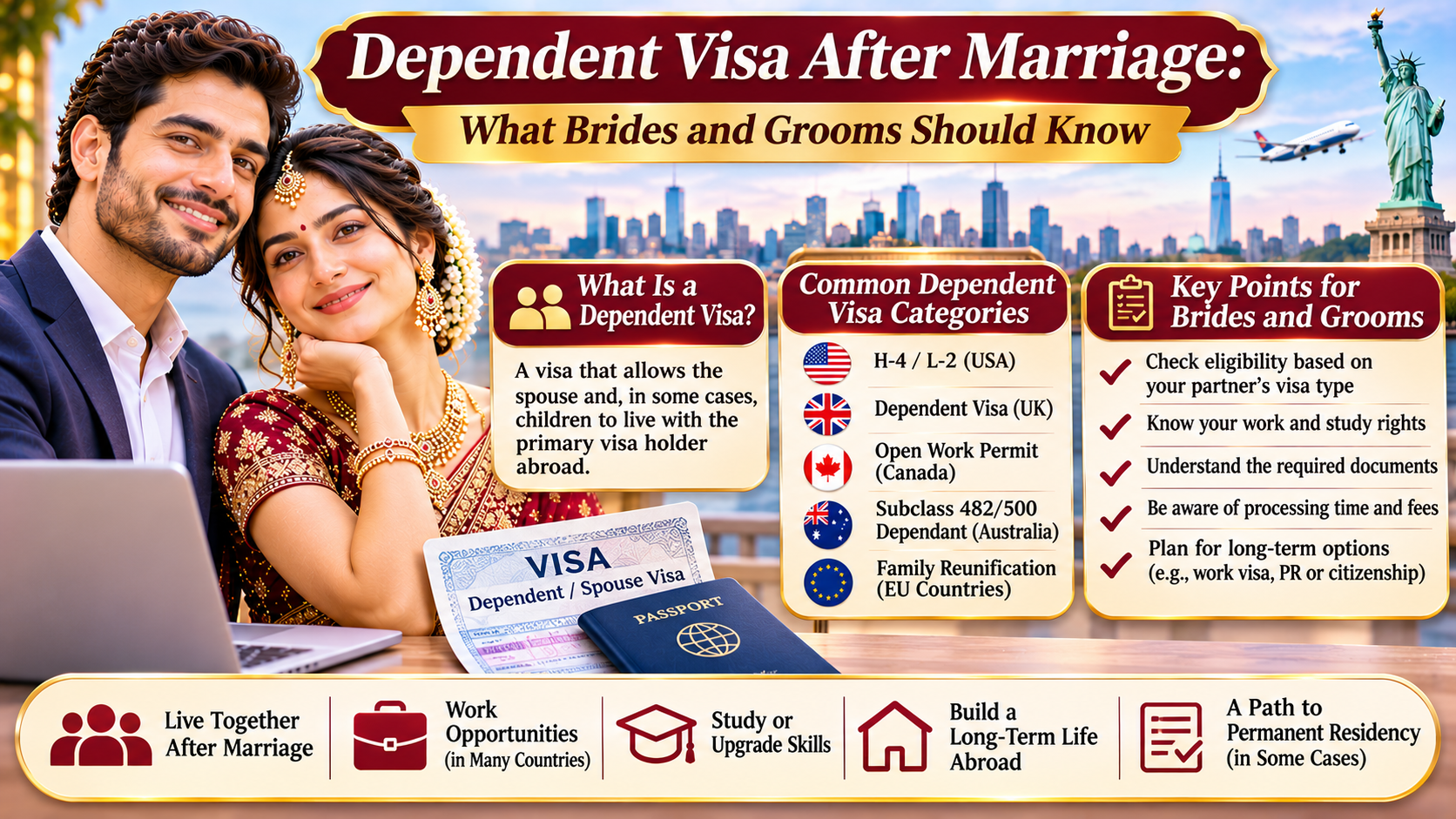
Marriage to a work visa holder may allow an eligible spouse to apply for dependent immigration status.
For example, spouses of H-1B workers may qualify for H-4 status, while spouses of L-1 workers may qualify for L-2 status.
However, employment authorisation depends on the specific immigration category and applicable requirements. Not every dependent spouse is automatically permitted to work.
Couples should discuss whether the accompanying spouse can continue their career, pursue higher education or establish an independent professional life after relocation.
Understanding these conditions before marriage can help both partners prepare financially and emotionally.
What Is a Green Card?
A Green Card is evidence of lawful permanent resident status in the United States. It generally allows an eligible individual to live and work permanently in the country, subject to applicable immigration laws.
Unlike many temporary employment-based immigration categories, permanent residency is generally not tied to continued employment with a specific sponsoring employer.
Green Card holders may have greater flexibility regarding employment and long-term settlement. However, permanent residency carries responsibilities and can be lost under certain circumstances.
A Green Card holder is not automatically a US citizen.
Marrying a Green Card Holder
A lawful permanent resident can generally petition for an eligible foreign-national spouse to immigrate to the United States.
However, spouse sponsorship involves eligibility requirements, documentation, visa availability and government processing procedures.
Marriage to a Green Card holder does not automatically grant permanent residency or immediate permission to enter or work in the United States.
Couples should discuss potential waiting periods, temporary living arrangements and the financial implications of remaining in different countries during immigration processing.
What Is Citizenship?
Citizenship establishes a person's legal membership in a country and generally provides broader rights and protections than temporary immigration status or permanent residency.
US citizens can generally live and work in the United States without employment-based immigration restrictions. They may also hold a US passport and exercise voting rights in federal elections, subject to applicable requirements.
Citizenship can provide greater long-term immigration stability, but it does not guarantee financial security, professional success or relationship compatibility.
Marrying a US Citizen
US citizens can generally petition for eligible foreign-national spouses through family-based immigration procedures.
Although spouses of US citizens are generally not subject to annual immigrant visa numerical limits, applications still require documentation, eligibility checks and government processing.
Marriage does not automatically provide US citizenship, a Green Card or immediate employment authorisation.
Couples must follow the appropriate immigration process and satisfy applicable legal requirements.
Key Differences That Matter in NRI Matrimony
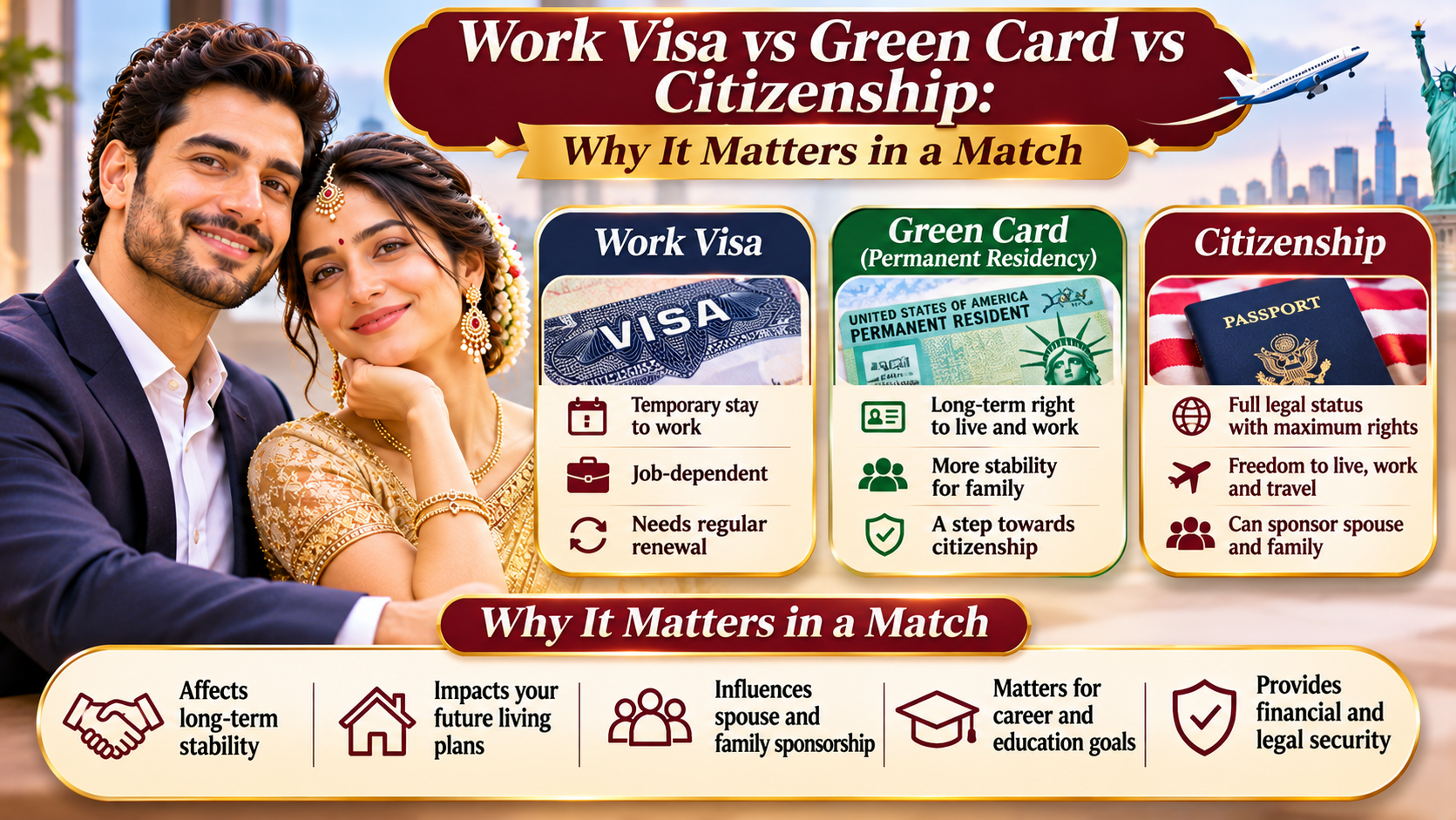
Work visa holders generally have temporary immigration arrangements that may depend on employment and continued eligibility.
Green Card holders have lawful permanent residency, which generally provides greater flexibility regarding employment and long-term settlement.
Citizenship provides broader legal rights and typically greater immigration stability.
These differences can affect spouse sponsorship, relocation timelines, career opportunities, international travel and future family planning.
Nevertheless, immigration status is only one consideration. Personal values, emotional maturity, honesty and shared relationship goals remain equally important.
Important Questions to Ask Before Marriage
Before finalising an international matrimonial alliance, discuss the following questions openly:
- What is your current immigration status?
- When does your authorised period of stay expire, if applicable?
- Are you eligible to sponsor your spouse?
- Will your spouse be legally permitted to work after relocation?
- Have you applied for permanent residency?
- What are your long-term settlement plans?
- How will you manage potential immigration delays?
- What happens if your employment or immigration circumstances change?
These conversations should be mutual, respectful and supported by accurate information.
How to Verify Immigration Status
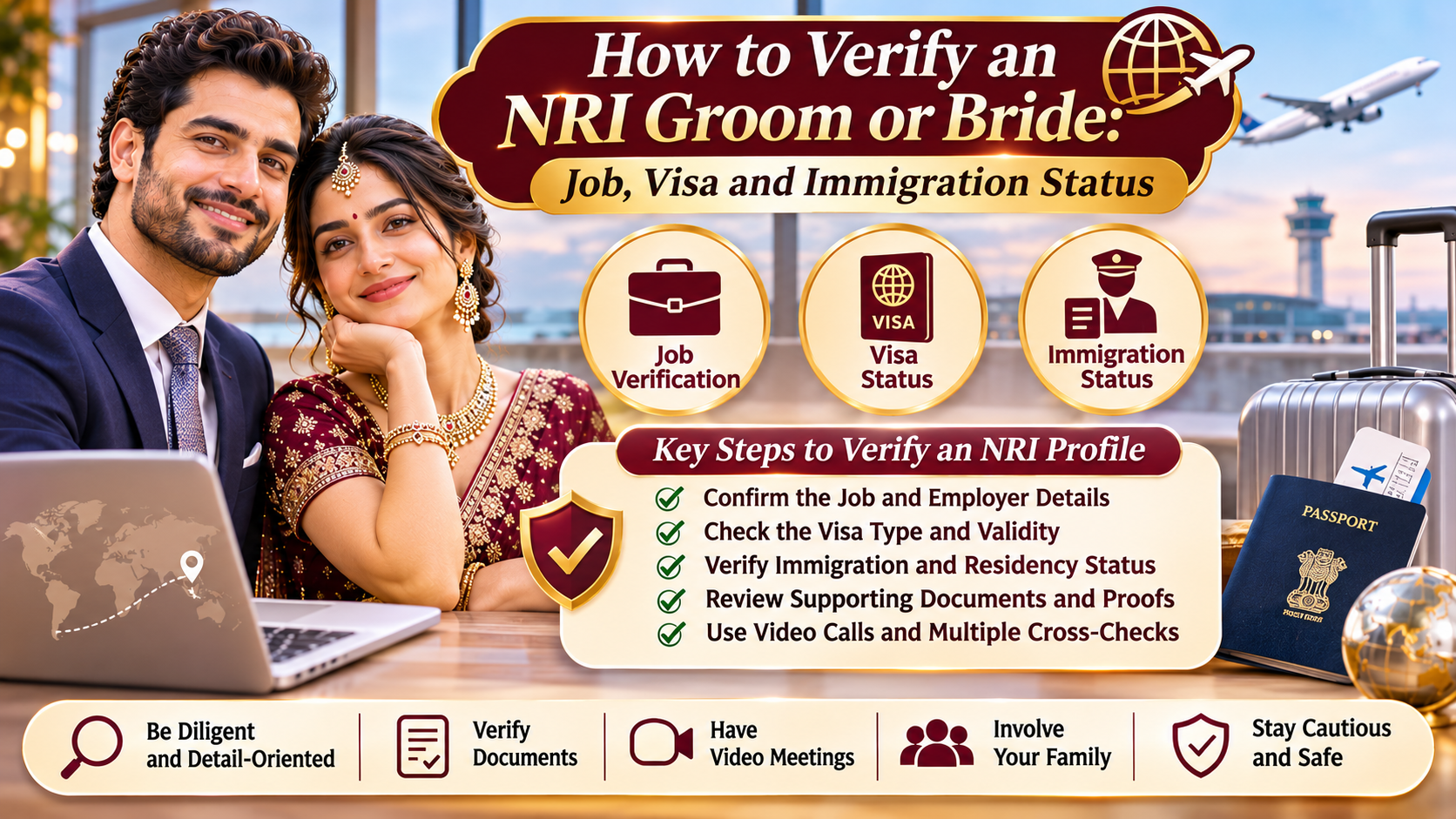
With the prospective partner's consent, review appropriate immigration documents, employment records or evidence of citizenship.
Use official government immigration resources or consult a qualified immigration professional when clarification is required.
Avoid sharing sensitive identity documents unnecessarily or relying entirely on verbal assurances.
Immigration regulations can change, making current official guidance essential before making relocation or employment decisions.
Conclusion
Understanding the differences between a work visa, Green Card and citizenship can help individuals make responsible decisions when considering NRI matrimonial proposals.
Each immigration category offers different opportunities, restrictions and responsibilities. Discussing these matters before marriage can reduce uncertainty and support realistic future planning.
Ultimately, a successful marriage should not be based solely on immigration advantages. Trust, emotional compatibility, mutual respect, honest communication and shared aspirations are the foundations of a meaningful lifelong relationship.
Frequently asked questions
1. What is the difference between a work visa, Green Card and citizenship?
A work visa generally permits temporary entry for authorised employment, a Green Card provides lawful permanent residency in the United States, and citizenship provides broader legal rights and protections, including eligibility for a US passport.
2. Can I work in the USA after marrying an H-1B visa holder?
Not automatically. An eligible spouse may obtain H-4 status, but employment authorisation is available only to certain H-4 spouses who meet applicable eligibility requirements and obtain the required authorisation.
3. Does marrying a Green Card holder automatically provide permanent residency?
No. A Green Card holder can generally petition for an eligible spouse, but permanent residency requires an immigration application, supporting documentation, visa availability and government approval.
4. Does marrying a US citizen automatically grant US citizenship?
No. Marriage to a US citizen does not automatically grant citizenship. A foreign-national spouse must complete the applicable immigration and naturalisation procedures and satisfy eligibility requirements.
5. Why is immigration status important in NRI matrimony?
Immigration status can affect spouse sponsorship, relocation timelines, employment authorisation, residency rights and long-term family planning. Understanding these factors helps couples make informed marriage decisions.