Marrying a Non-Resident Indian (NRI) can offer exciting opportunities to build a life together in another country. However, international matrimonial alliances require careful consideration because geographical distance, immigration regulations and unfamiliar employment systems can make background verification challenging.
Before finalising an NRI marriage proposal, individuals and families should verify important information regarding employment, identity, immigration status, educational qualifications and marital history.
Responsible verification is not about creating unnecessary suspicion. It is about establishing transparency, protecting both individuals and building a relationship based on trust.
Why Is NRI Matrimonial Verification Important?
NRI matrimonial profiles may contain information about overseas employment, professional achievements, income, permanent residency or citizenship. However, not every detail presented online is independently verified.
Misleading information about employment, visa status, previous marriages or financial circumstances can create serious difficulties after marriage.
A structured verification process helps individuals understand their prospective partner's actual circumstances and make informed decisions about marriage, relocation and future responsibilities.
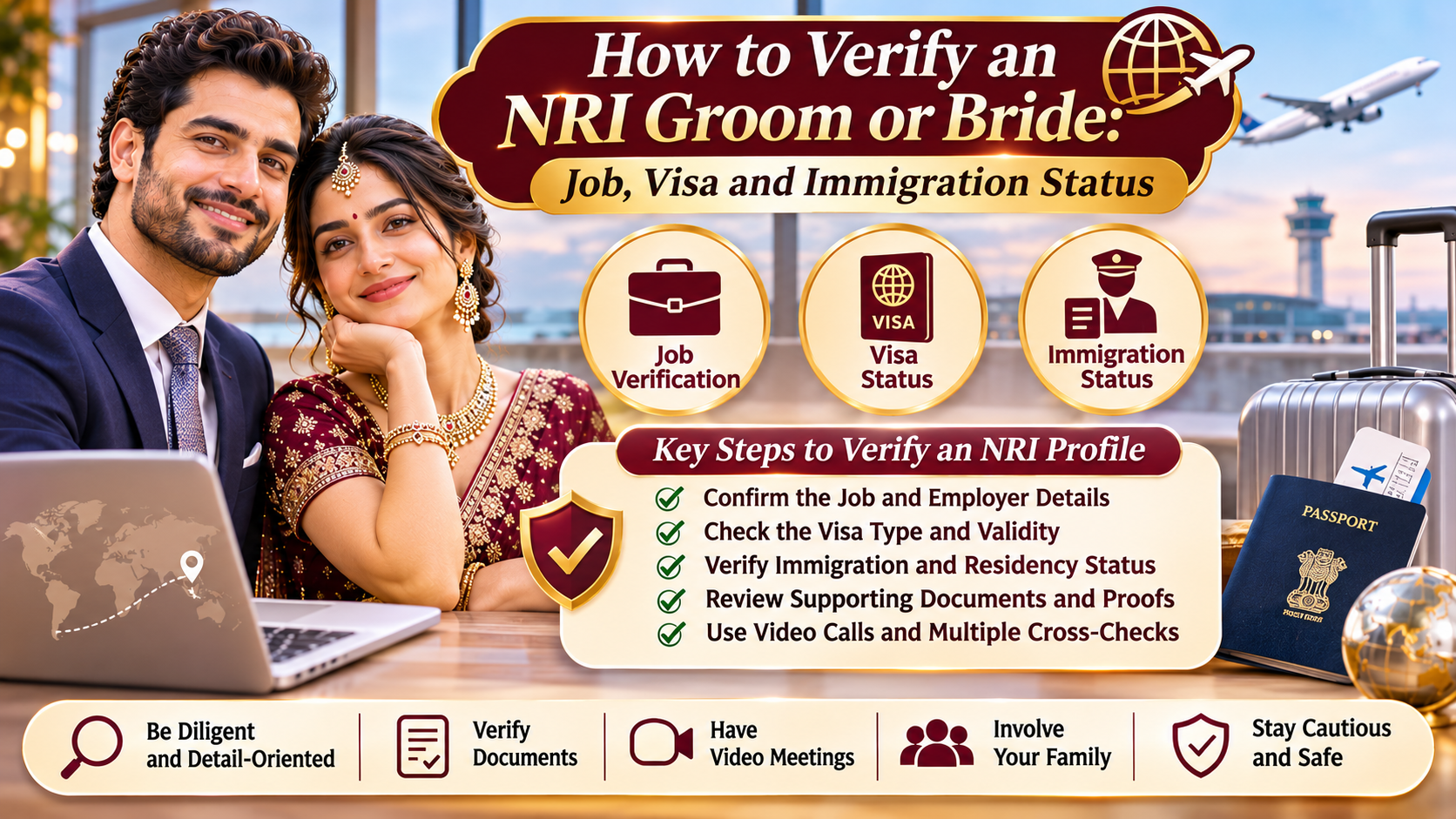
1. Verify Identity and Passport Details
Begin by confirming the prospective partner's full legal name, nationality, age and country of residence.
With their consent, request to review relevant identification documents, such as a passport or government-issued identity card.
Check whether the information matches their matrimonial profile and other supporting documents.
Avoid collecting or circulating unnecessary passport copies, identification numbers or sensitive personal information. Where formal authentication is required, consult an authorised professional or relevant government authority.
2. Verify Employment and Professional Background
Employment verification is particularly important when a prospective partner claims to hold a professional position overseas.
Request appropriate supporting information, such as a recent employment confirmation letter, employment contract or redacted salary statement.
Review the employer's official website and publicly available business information. With the individual's permission, contact the employer through independently obtained official contact details.
Professional networking profiles can provide additional context but should not be treated as conclusive evidence of employment.
For self-employed individuals and business owners, relevant business registration documents may help establish professional credibility.
3. Check Visa and Immigration Status
Understanding immigration status is essential when planning to relocate after marriage.
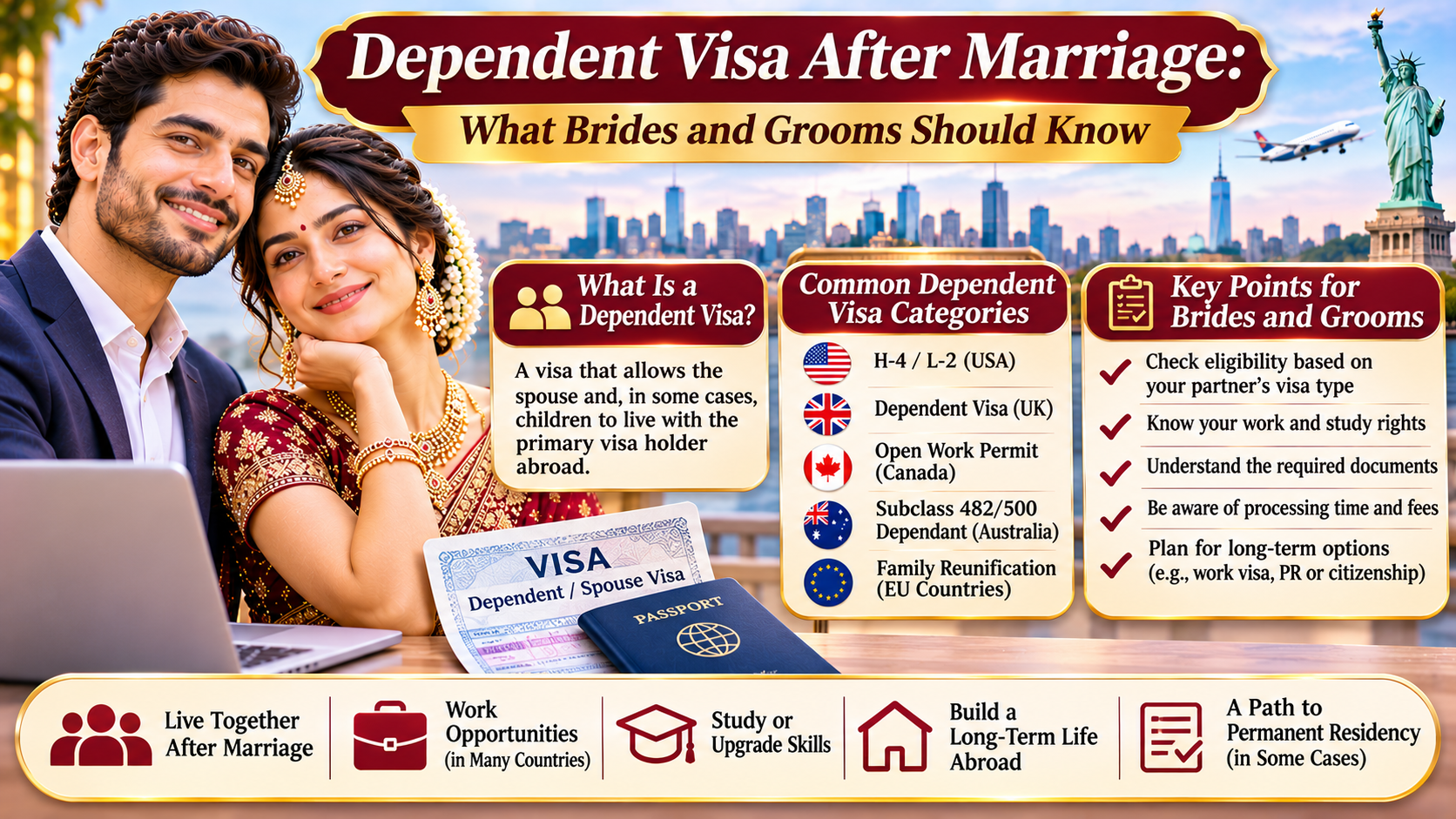
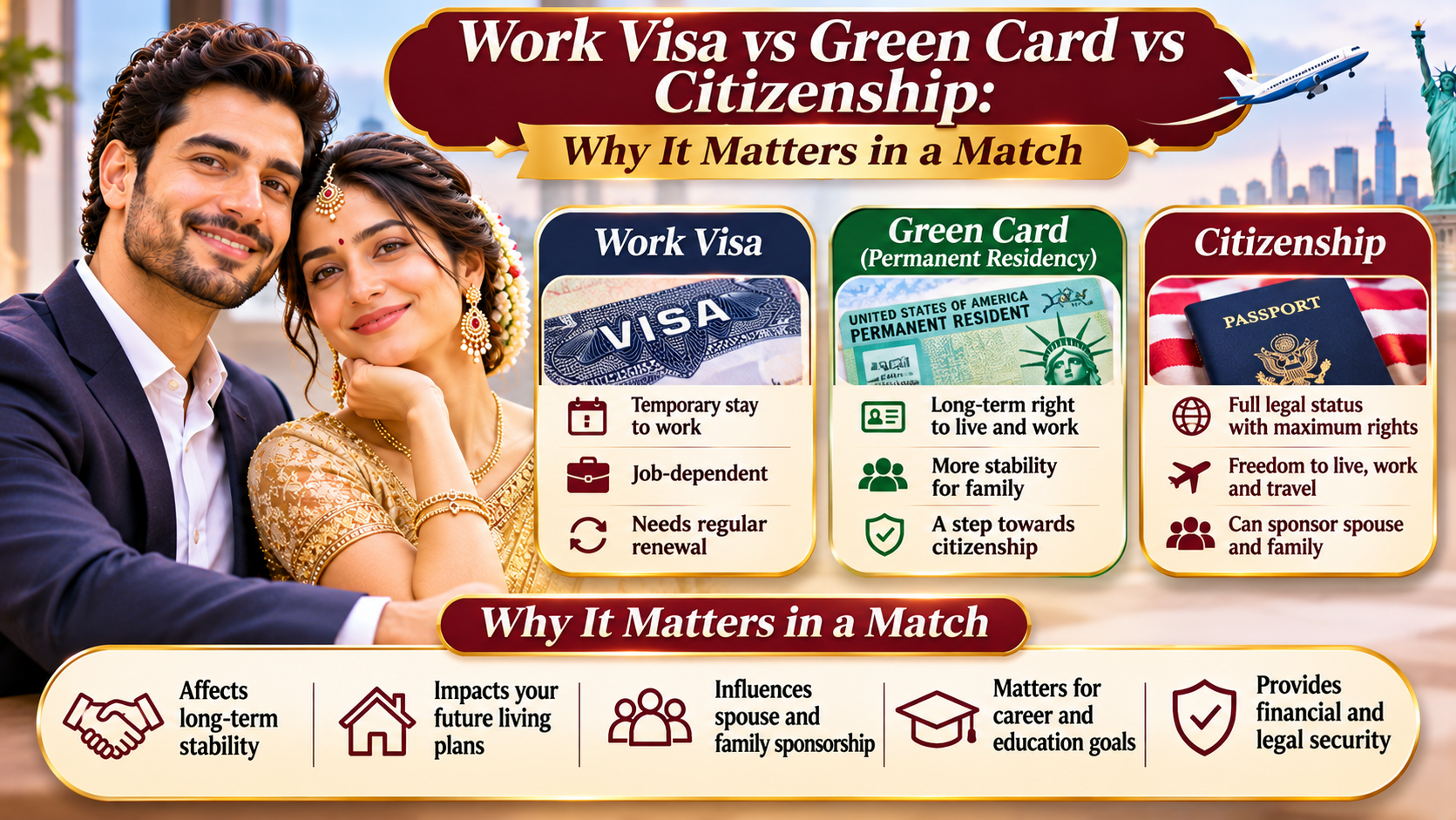
An overseas resident may hold a temporary work visa, student visa, permanent residency, dependent visa or foreign citizenship. Each category carries different rights, restrictions and responsibilities.
Discuss the prospective partner's current immigration category, visa expiry date, renewal requirements and ability to sponsor a spouse.
Request that they demonstrate their current status through official immigration records or authorised government services where available.
A visa document alone may not establish current immigration status. Verification procedures differ across countries, and some require the individual's consent or participation.
4. Understand Spouse Visa Eligibility
Marriage to an NRI or foreign citizen does not automatically guarantee a spouse visa, permanent residency or citizenship.
Immigration authorities may consider sponsorship eligibility, financial requirements, relationship evidence, documentation and other country-specific conditions.
Before planning an international relocation, review the destination country's official immigration website or consult a qualified immigration professional.
Discuss whether you will be permitted to work, study or access healthcare after relocating. Understanding these conditions can help prevent unrealistic expectations and unnecessary financial difficulties.
5. Verify Marital History
Both individuals should openly discuss their previous relationships and marital status.
If a prospective partner has been divorced, request to review the final divorce decree with their consent. If widowed, relevant documentation may be appropriate.
International divorces can involve complex legal recognition issues. A qualified family-law professional can help determine whether a previous marriage has been legally dissolved and whether the person is eligible to remarry.
Never rely solely on verbal assurances when significant legal questions remain unresolved.
6. Review Educational and Financial Information
Educational qualifications can be checked through degree certificates, professional registrations or authorised verification services where appropriate.
Discuss financial responsibilities, existing debts, living expenses, accommodation arrangements and expectations regarding employment after marriage.
Financial transparency should be mutual and proportionate. Never demand online banking passwords, OTPs or unrestricted access to another person's financial accounts.
7. Meet in Person and Communicate With Family
Video conversations and regular communication can help establish familiarity, but they should not replace meaningful personal interaction.
Whenever practical, arrange in-person meetings in safe and comfortable surroundings. Meeting family members and trusted acquaintances may provide additional context about the prospective partner's background.
Discuss long-term expectations, cultural differences, career goals, family responsibilities and personal independence before making commitments.
Warning Signs of NRI Matrimonial Fraud
Be cautious if a prospective partner repeatedly avoids video calls, provides inconsistent employment information, refuses reasonable verification or pressures you into an immediate marriage.
Requests for money related to visa processing, customs clearance, emergency travel or overseas investments should also be treated carefully.
Do not transfer money or surrender original identity documents to unfamiliar individuals. If fraud is suspected, preserve relevant communications and contact the appropriate authorities.
Conclusion
Verifying an NRI groom or bride before marriage is an essential step towards making a responsible matrimonial decision.
Checking employment, immigration status, identity, marital history and financial expectations can help both individuals understand their circumstances and plan their future confidently.
Verification should always be conducted respectfully, lawfully and with appropriate consent. No background check can guarantee a successful marriage, but transparency, mutual respect, honest communication and emotional compatibility can create a stronger foundation for a secure and meaningful lifelong relationship.
Frequently asked questions
1. How can I verify an NRI groom or bride before marriage?
You can verify an NRI groom or bride by reviewing identity documents, employment records, immigration status, educational qualifications and marital history with their consent. Independent professional verification may provide additional assurance.
2. How can I check whether an NRI groom or bride is employed abroad?
Request a recent employment confirmation letter or other appropriate employment documents. With the individual's permission, contact the employer through independently verified official contact details to confirm employment information.
3. How can I verify the visa and immigration status of an NRI?
Ask the individual to demonstrate their current immigration status through official government immigration services or relevant documentation. Verification methods and access requirements vary depending on the country and visa category.
4. Does marrying an NRI guarantee a spouse visa or permanent residency?
No. Marriage to an NRI does not automatically guarantee a spouse visa, permanent residency or citizenship. Eligibility depends on the destination country's immigration laws, sponsorship requirements and individual circumstances.
5. What are the common warning signs of NRI matrimonial fraud?
Common warning signs include inconsistent personal information, fake employment claims, avoidance of reasonable verification, requests for money, refusal to meet in person and pressure to finalise marriage quickly.