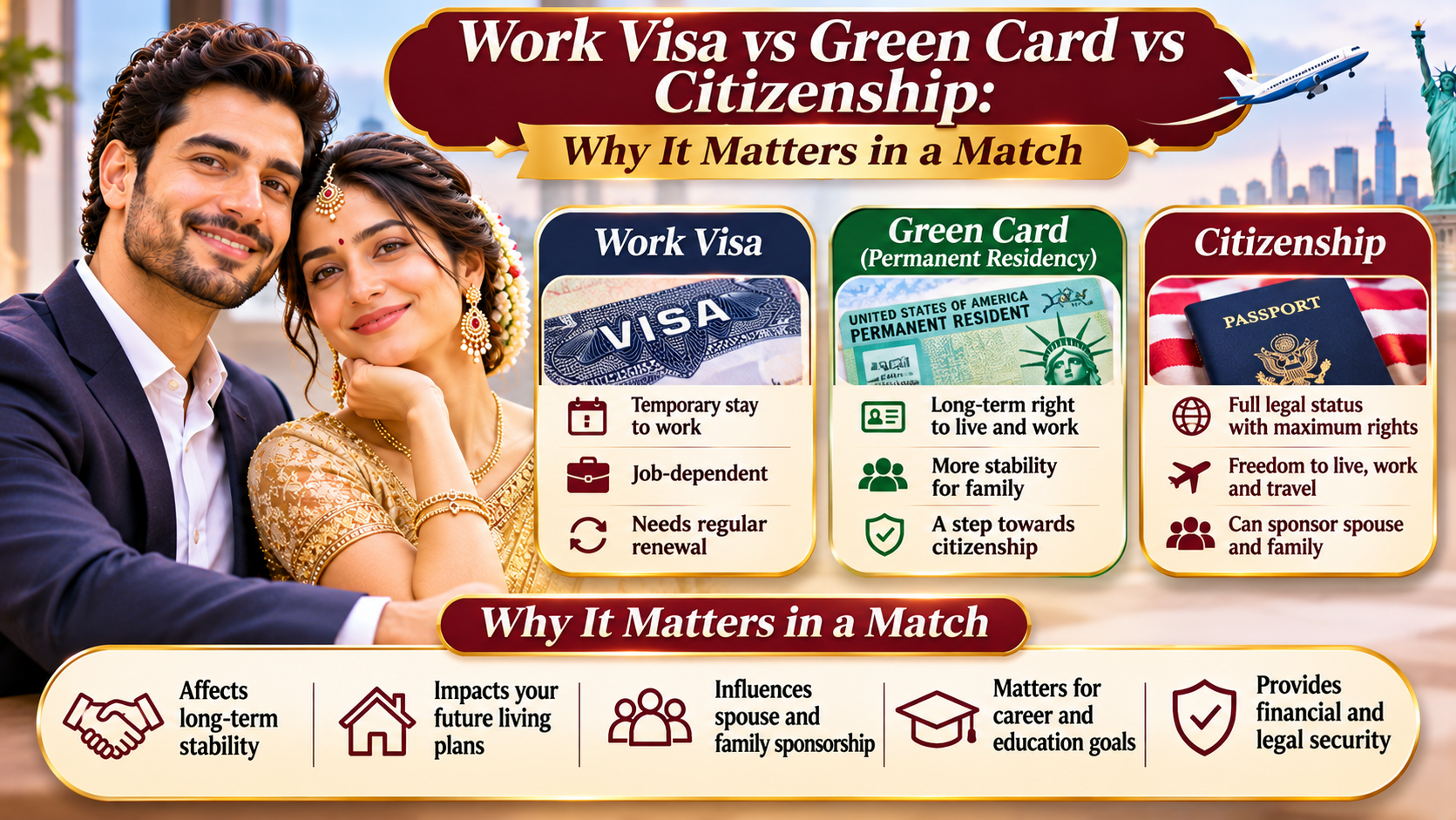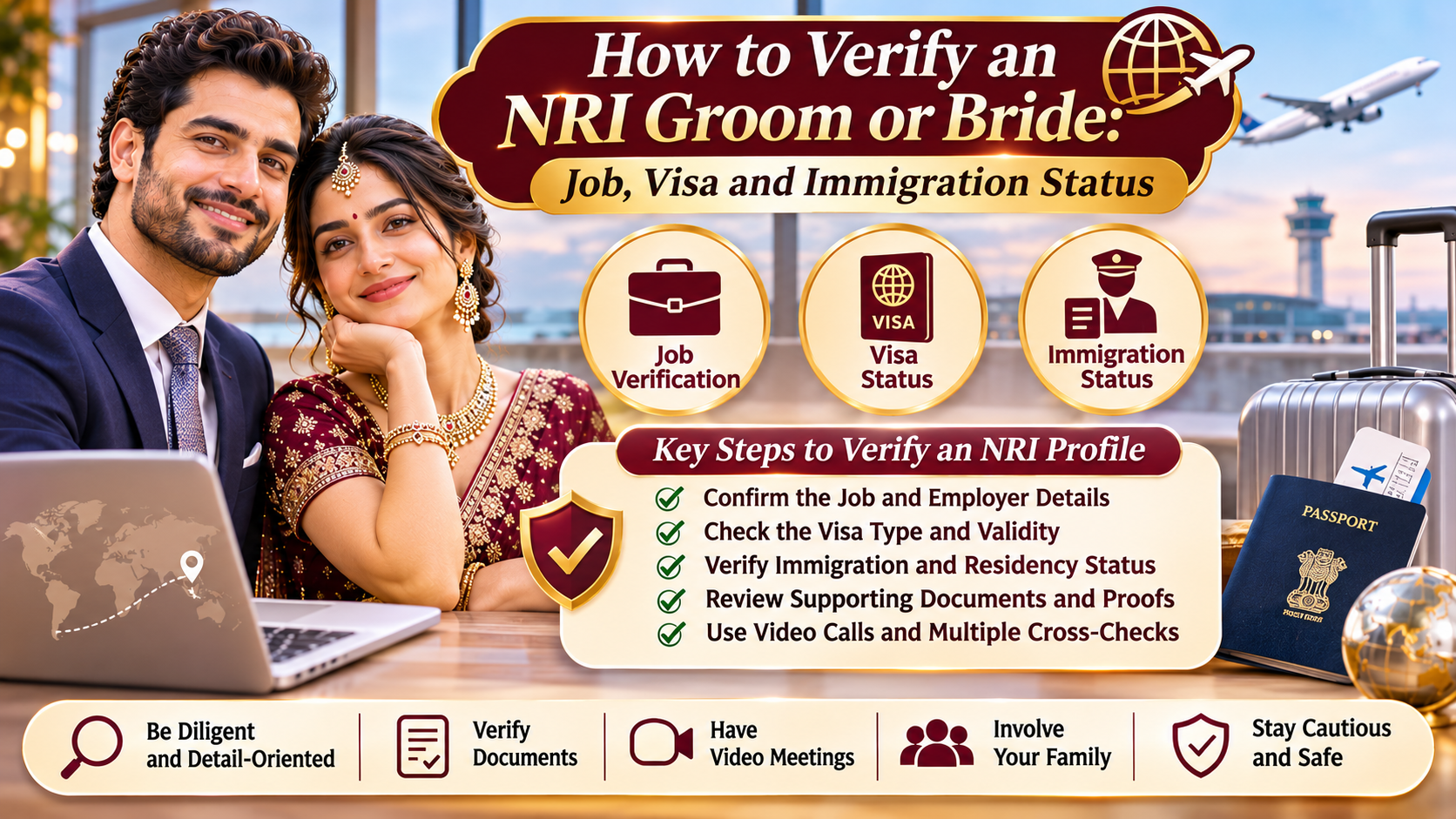
Marriage to an NRI or overseas professional can mark the beginning of an exciting new chapter. However, relocating to another country after marriage involves more than wedding preparations and international travel. Understanding dependent visa requirements, immigration restrictions and employment rights is essential for planning a comfortable future together.
Many brides and grooms assume that marrying someone who lives abroad automatically allows them to relocate and work in that country. In reality, immigration eligibility depends on the destination country, the sponsoring partner's legal status and applicable government regulations.
What Is a Dependent Visa?
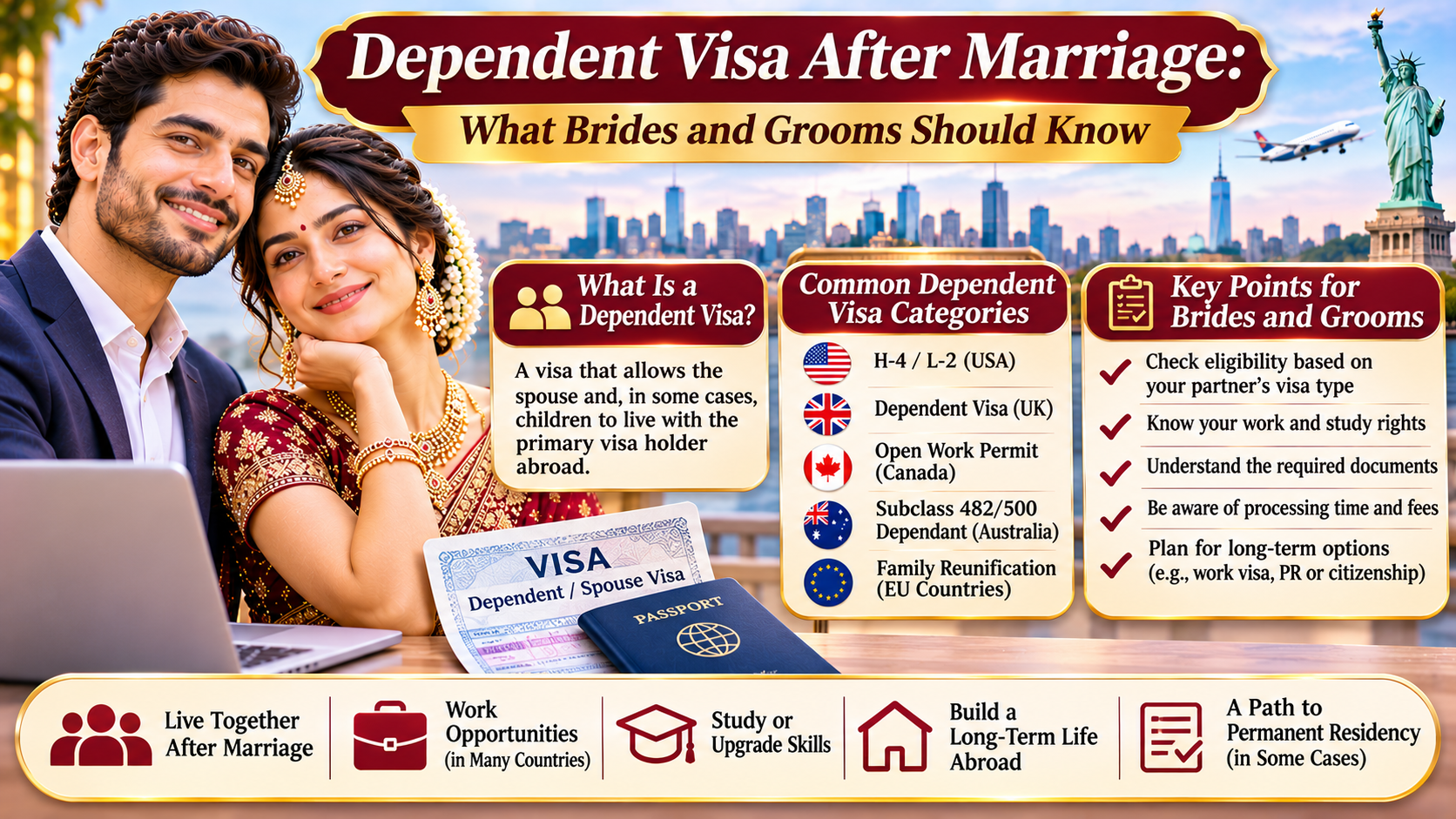
A dependent visa is an immigration category that may allow eligible family members, including legally recognised spouses, to accompany or join someone living abroad under a qualifying immigration status.
Dependent visas are commonly associated with employment, education and certain other immigration categories. The sponsoring partner may be required to demonstrate valid immigration status, financial eligibility and a genuine marital relationship.
Dependent visas differ from permanent residence and citizenship. They may have specific validity periods, renewal requirements and restrictions on employment.
Why Dependent Visa Status Matters in NRI Matrimony
Before accepting an international matrimonial proposal, individuals should understand the prospective partner's immigration circumstances.
A person working abroad on a temporary visa may have different sponsorship options from someone holding permanent residency or citizenship.
These differences can influence relocation timelines, employment opportunities, healthcare access, financial independence and long-term settlement plans.
Discussing immigration matters before marriage helps both partners establish realistic expectations and avoid unnecessary misunderstandings.
Common Dependent and Spouse Visa Categories
Different countries offer different immigration pathways for married couples.
In the United States, eligible spouses of H-1B workers may apply for H-4 status, while spouses of L-1 workers may qualify for L-2 status.
The United Kingdom offers dependant routes for certain eligible workers and students. Canada provides spousal immigration pathways and work permits for qualifying applicants.
Australia also offers partner and dependent immigration pathways, depending on the sponsoring individual's status.
Eligibility requirements vary considerably. Couples should identify the appropriate immigration category before making travel or relocation arrangements.
Documents Required for a Dependent Visa After Marriage
Although documentation requirements differ between countries, commonly requested documents may include:
- Valid passports of both spouses.
- Legally recognised marriage certificate.
- Evidence of the sponsoring partner's immigration status.
- Employment confirmation or financial supporting documents.
- Evidence of a genuine marital relationship.
- Accommodation details, where required.
- Visa application forms and photographs.
- Medical examinations or police clearance certificates, where applicable.
Some immigration authorities may require certified translations, document authentication or additional relationship evidence.
Always consult the official immigration checklist for the relevant country and visa category.
Can a Dependent Visa Holder Work Abroad?
Employment eligibility is one of the most important considerations for brides and grooms planning to relocate after marriage.
Some dependent immigration categories permit employment, while others require separate work authorisation or impose restrictions.
For example, certain H-4 spouses in the United States may qualify for employment authorisation, while eligible L-2 spouses generally have employment authorisation based on their status.
Individuals should confirm their work rights before resigning from an existing job or accepting overseas employment.
Couples should also discuss financial arrangements if one partner cannot work immediately after relocation.
Important Questions to Ask Before Marriage
Open communication about immigration status can help couples prepare for their future. Discuss the following questions before finalising a matrimonial alliance:
- What is your current visa or immigration status?
- Are you eligible to sponsor a spouse?
- Can I legally work or study after relocation?
- How long might the application process take?
- What happens if your employment ends?
- Will I have access to healthcare and insurance?
- What are our long-term residency plans?
- How will we manage expenses during immigration delays?
These conversations should involve both partners equally and encourage transparency.
Financial Independence and Personal Safety
Moving abroad on dependent immigration status may create practical challenges, particularly when one partner cannot immediately work.
Both spouses should discuss household expenses, personal savings, emergency funds, healthcare coverage and access to financial resources.
Maintain secure access to your passport, immigration documents and important personal records. Keep emergency contact details and information about the nearest Indian embassy or consulate, where relevant.
If immigration status depends on a spouse and the relationship becomes unsafe, seek confidential assistance from a qualified immigration professional or local support organisation. Independent immigration options may be available depending on the circumstances.
Common Mistakes to Avoid
Avoid assuming that marriage automatically guarantees a visa, work permit or permanent residency.
Never submit false documents, provide misleading relationship information or pay unverified immigration agents who promise guaranteed approvals.
Do not make irreversible career or financial decisions before understanding your immigration eligibility.
Processing times and regulations can change, so verify current requirements through official government sources.
Conclusion
Understanding dependent visa requirements after marriage is an essential part of international matrimonial planning.
By discussing immigration status, employment rights, financial responsibilities and long-term settlement goals before marriage, brides and grooms can prepare for their future with greater confidence.
A successful international marriage requires more than immigration eligibility. Mutual respect, honest communication, emotional compatibility, financial transparency and shared aspirations are equally important.
With responsible planning and reliable immigration guidance, couples can navigate the challenges of overseas relocation while building a meaningful and supportive married life together.
Frequently asked questions
1. What is a dependent visa after marriage?
A dependent visa is an immigration category that may allow an eligible spouse to accompany or join their married partner living abroad under a qualifying immigration status. Eligibility depends on the destination country and applicable immigration requirements.
2. Can I work abroad on a dependent visa after marriage?
Employment rights depend on the country and dependent visa category. Some dependent spouses can work based on their immigration status, while others require separate employment authorisation or may face work restrictions.
3. What documents are required for a dependent visa after marriage?
Commonly required documents include valid passports, a marriage certificate, proof of the sponsoring spouse's immigration status, financial or employment documents and evidence of a genuine marital relationship. Additional requirements vary by country.
4. How long does it take to get a dependent visa after marriage?
Dependent visa processing times vary depending on the destination country, visa category, application completeness, government workload and individual circumstances. Applicants should check official immigration websites for current processing estimates.
5. Can a dependent visa lead to permanent residency or citizenship?
Some dependent or spouse immigration categories may provide a pathway to permanent residency and eventually citizenship. However, neither is automatically granted after marriage, and applicants must satisfy the relevant legal and immigration requirements.