Talking to Matches Online — Safety Guidelines
Introduction: Building Genuine Connections Safely
Online matrimonial conversations are often the first step toward finding a life partner. They provide opportunities to understand someone's personality, family values, career goals, and expectations before meeting in person.
However, digital communication also involves privacy risks, impersonation, emotional manipulation, and financial fraud.
The FBI and Federal Trade Commission warn that romance scammers can create convincing identities, develop emotional trust, and eventually request money or sensitive information.
Following sensible safety practices can help you develop meaningful connections while protecting your personal information and independence.
1. Start Conversations Through Trusted Platforms
Begin communicating through the matrimonial platform's available messaging features whenever possible.
Established platforms may provide reporting, blocking, and account moderation tools, although their protections vary.
Avoid immediately sharing your personal mobile number or moving to an unfamiliar messaging application.
If you eventually switch to WhatsApp or another service, ensure you feel comfortable and understand the privacy implications.
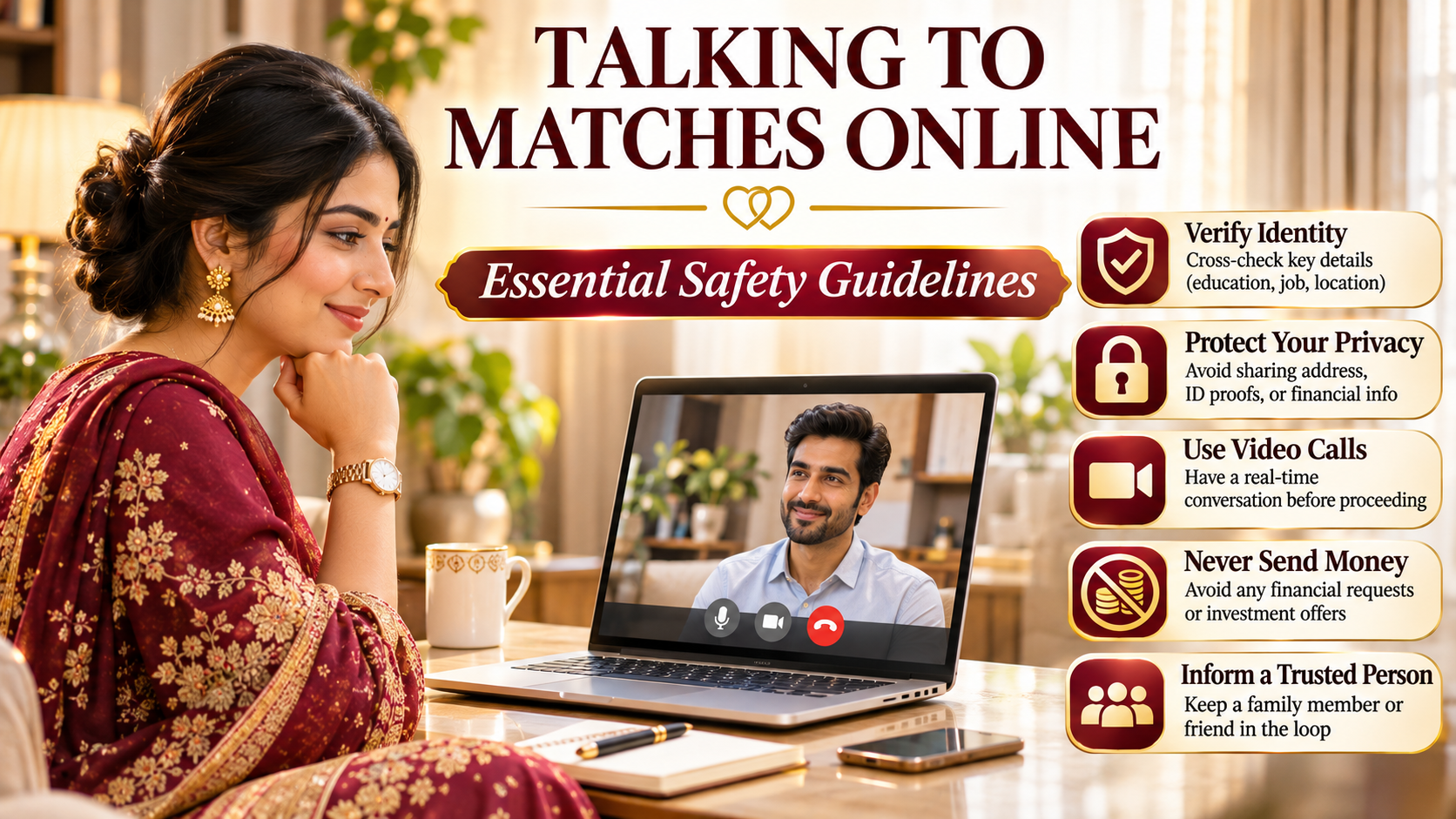
2. Protect Your Personal Information
Initial conversations should focus on general interests, education, profession, lifestyle, and marriage expectations.
Avoid sharing sensitive information such as:
- Aadhaar or PAN numbers.
- Banking details, passwords, and OTPs.
- Complete residential addresses.
- Confidential workplace information.
- Private photographs or financial documents.
Personal information can be misused for identity theft, impersonation, or financial exploitation.
Share only what is necessary as trust develops.
3. Verify Important Profile Details
A convincing matrimonial profile does not guarantee that every claim is accurate.
Check for consistency in age, education, employment, location, and family background.
Where appropriate, use publicly available professional information or consent-based verification.
A reverse image search can sometimes identify photographs associated with unrelated names or accounts.
Verification should remain respectful and proportionate rather than becoming intrusive.
4. Take Time to Understand the Person
Genuine compatibility develops through meaningful conversations, not simply frequent messages.
Discuss interests, personal values, family expectations, professional ambitions, and long-term plans.
Be cautious if someone declares intense love or demands immediate commitment after minimal interaction.
The FBI identifies unusually rapid emotional attachment as a potential warning sign of romance fraud.
Healthy relationships allow sufficient time for independent decision-making.
5. Arrange Video Calls Carefully
Video conversations can help prospective partners communicate more naturally before meeting.
Choose a convenient time, use a trusted application, and conduct calls in a private, comfortable environment.
Avoid displaying sensitive documents, personal addresses, or confidential information in the background.
Remember that video calls are not definitive identity verification. Modern impersonation techniques can involve manipulated or AI-generated media.
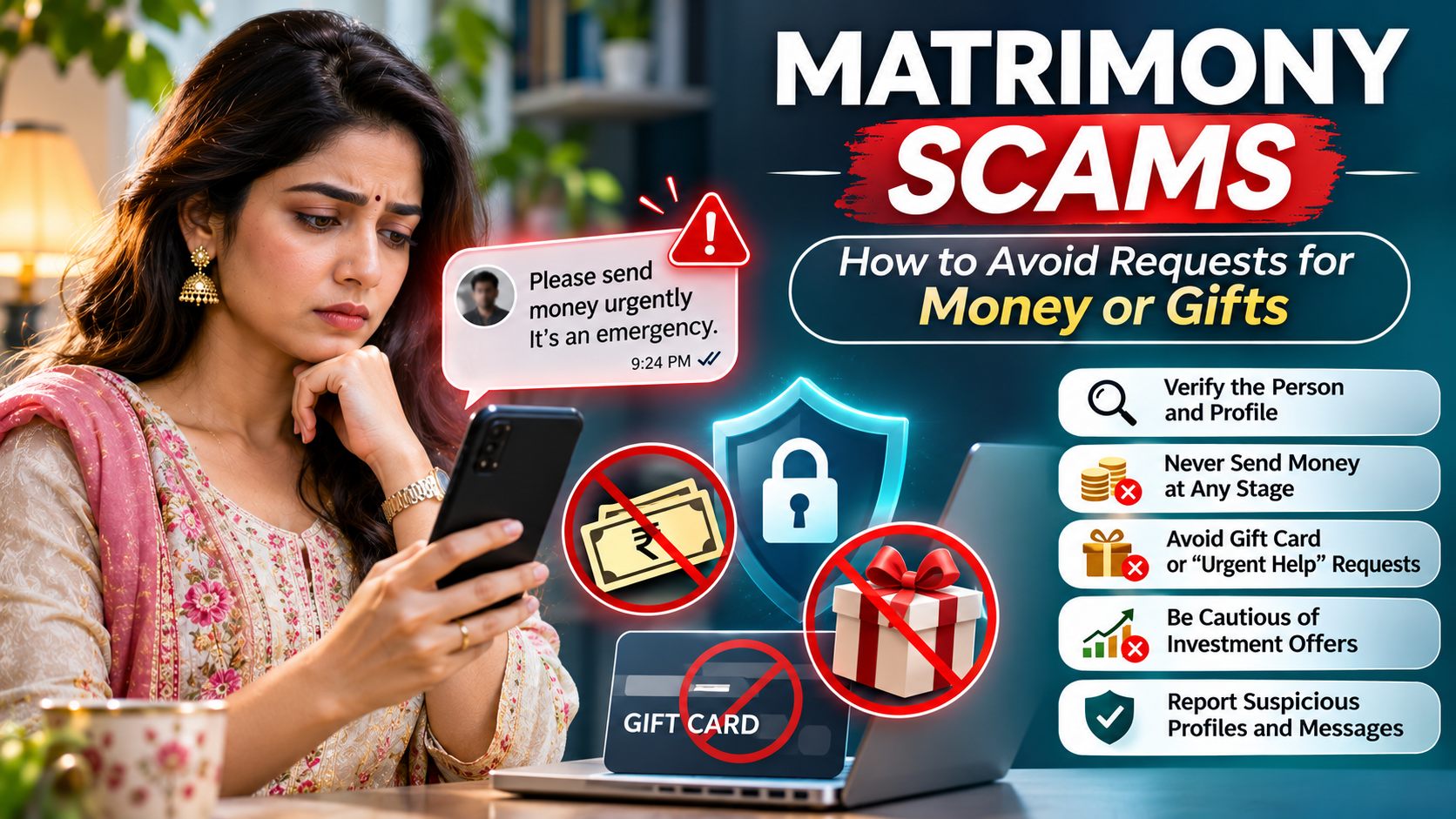
6. Never Send Money to an Online Match
Financial requests should be treated with particular caution.
Fraudsters may claim they need assistance with medical treatment, international travel, customs clearance, business emergencies, or investment opportunities.
The FTC advises against sending money or gifts to romantic contacts you have not met in person.
Do not transfer funds, share banking access, receive suspicious payments, or invest through someone you know only through matrimonial conversations.
7. Recognise Emotional Manipulation
Warning signs include repeated pressure, excessive flattery, threats, secrecy, and attempts to isolate you from trusted people.
Someone may insist that you stop speaking with other matches or demand immediate agreement to marriage.
Others may become hostile when you ask reasonable questions.
A respectful prospective partner should accept personal boundaries and allow both individuals to make decisions freely.
8. Discuss Marriage Expectations Honestly
Safety also involves emotional clarity.
Before developing serious expectations, discuss important matters such as career plans, relocation, children, family responsibilities, financial attitudes, and lifestyle preferences.
Avoid making promises you are not ready to fulfil.
Honest communication helps both individuals identify incompatibilities early without unnecessary emotional pressure.
9. Be Cautious with Social Media Connections
Connecting through social media may reveal more personal information than intended.
Review privacy settings before accepting requests or sharing photographs.
Avoid granting access to private albums, family contact details, workplace locations, or daily routines.
Do not assume that an extensive social media presence proves someone's identity.
A genuine online presence can still be impersonated.
10. Plan Your First Meeting Safely
Once both individuals feel comfortable, consider meeting in a public location during convenient hours.
Inform a trusted person about your meeting plans and arrange independent transportation.
Avoid isolated locations or invitations to private accommodation during an initial meeting.
You should always feel free to leave if the situation becomes uncomfortable.
11. Respect Boundaries and Confidentiality
Online matrimonial conversations involve personal information and emotional vulnerability.
Never share another person's photographs, messages, family details, or private disclosures without permission.
Avoid recording calls or distributing screenshots without consent.
If you decide not to proceed, communicate politely and clearly whenever safe.
Respectful behaviour is important even when compatibility is absent.
12. Know When to Stop and Report
Discontinue communication when someone repeatedly violates boundaries, requests money, threatens you, or provides seriously inconsistent information.
Preserve relevant messages, screenshots, profile links, and transaction records.
Report suspicious activity through the matrimonial platform.
In India, cybercrime complaints can be submitted through the National Cyber Crime Reporting Portal at cybercrime.gov.in. The national helpline 1930 assists with reporting financial cyberfraud.
Conclusion: Safety and Trust Should Grow Together
Talking to matrimonial matches online can be a meaningful way to explore potential relationships.
However, genuine connections require patience, transparency, respectful communication, and sensible verification.
Protect your personal information, recognise financial and emotional warning signs, and take time to understand someone before making significant commitments.
A healthy matrimonial conversation should make you feel respected, informed, and free to make your own decisions.
Frequently asked questions
1. Is it safe to talk to matrimonial matches online?
Yes, online matrimonial conversations can be conducted more safely when you use trusted platforms, protect sensitive information, verify important details, and avoid financial transactions with unverified contacts. No platform can eliminate every risk.
2. What should I discuss during my first matrimonial conversation?
Begin with general topics such as education, profession, interests, family values, lifestyle, and marriage expectations. Avoid intrusive personal questions, financial demands, or requests for confidential documents.
3. When should I share my phone number with a matrimonial match?
Share your number only when you feel comfortable and have established reasonable confidence in the person's identity and intentions. You can continue using the platform's messaging features until you are ready.
4. How can I identify suspicious behaviour during online matrimonial chats?
Watch for inconsistent personal information, unusually rapid emotional attachment, repeated avoidance of verification, requests for money, secrecy, and pressure to make immediate commitments. A single sign does not necessarily establish fraud.
5. What should I do if a matrimonial match threatens or scams me?
Stop engaging, preserve relevant evidence, and report the account to the matrimonial platform. In India, report suspected cybercrime through cybercrime.gov.in. For financial cyberfraud, contact 1930 promptly and notify your bank.