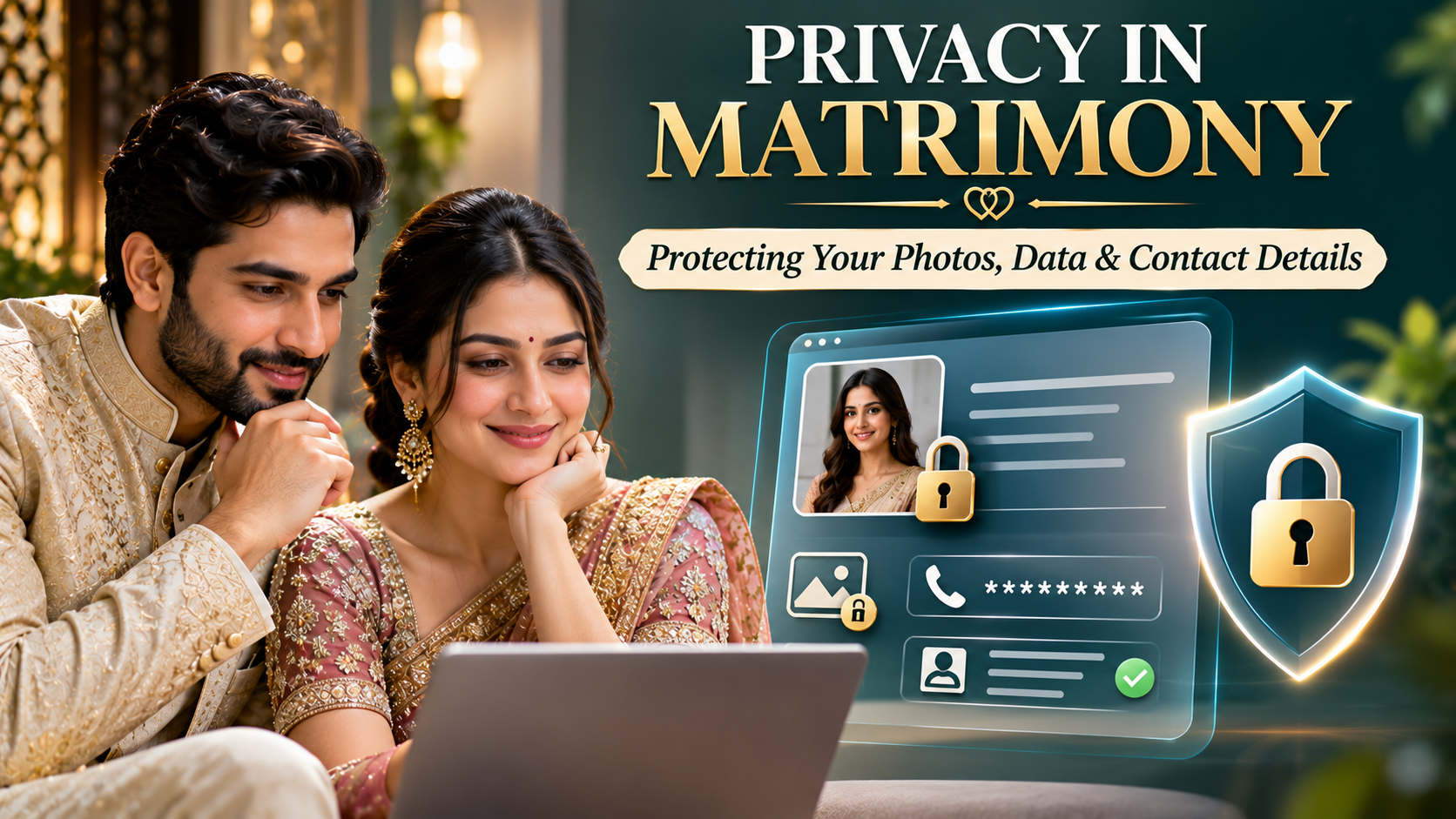
When Marriage Proposals Become Financial Traps
Online matrimonial platforms have made finding a potential life partner more convenient. Unfortunately, fraudsters sometimes exploit the emotional trust associated with marriage proposals to obtain money, expensive gifts, or confidential financial information.
Unlike ordinary online shopping fraud, matrimonial scams may involve weeks or months of personal conversations before a financial request appears.
In October 2025, India's Indian Cyber Crime Coordination Centre warned about criminals misusing matrimonial platforms to develop emotional relationships and promote fraudulent investment schemes.
Understanding how these scams operate is essential for protecting your finances and emotional well-being.
1. Recognise the Pattern of Emotional Manipulation
Matrimonial fraud often begins with an attractive profile, polite communication, and apparently serious marriage intentions.
A scammer may discuss family values, future plans, or wedding arrangements to establish credibility.
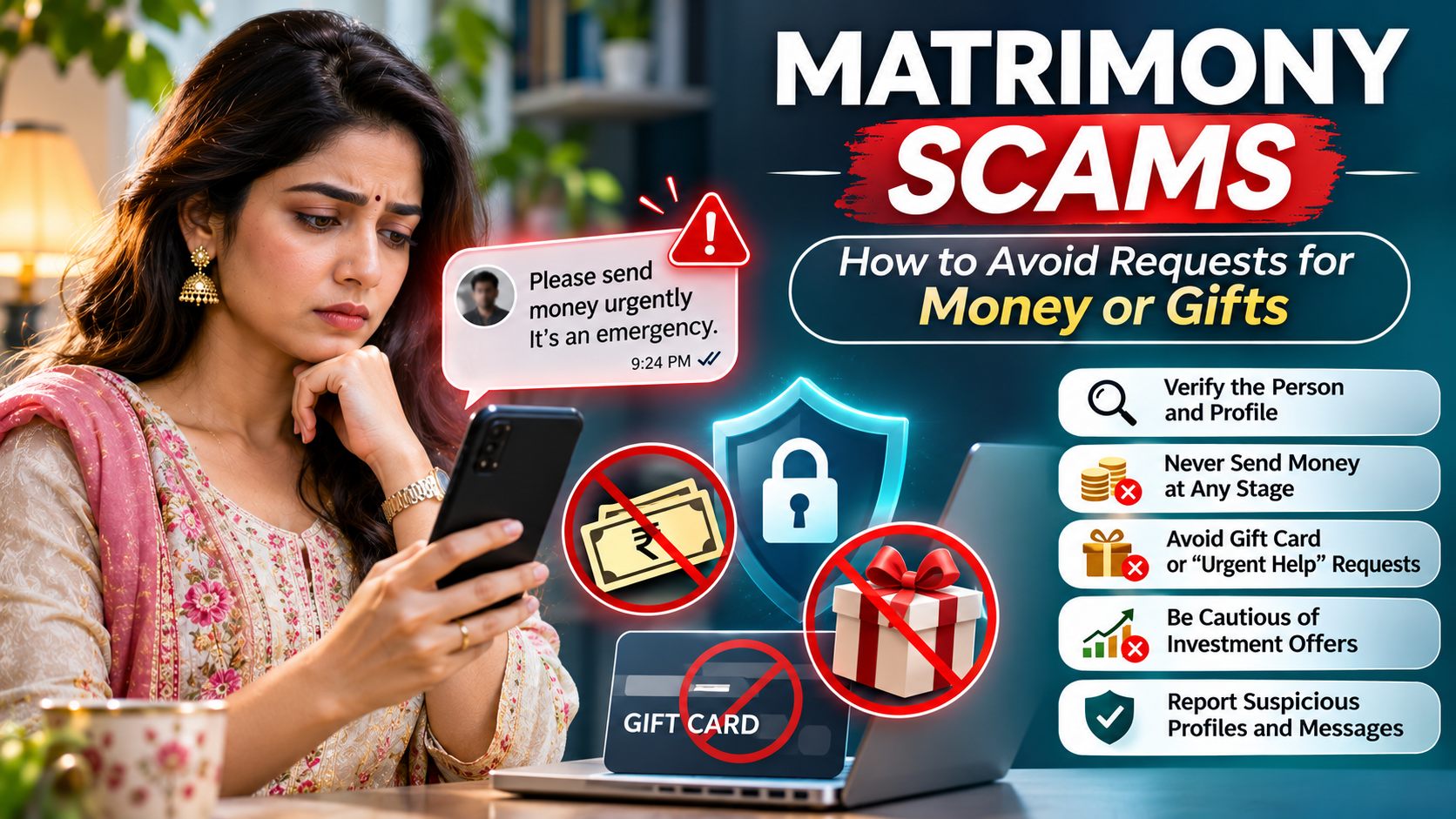
Once trust develops, an unexpected financial problem appears.
Warning signs include:
- Expressing intense affection unusually quickly.
- Repeatedly postponing personal meetings.
- Asking you to keep financial conversations secret.
- Becoming aggressive when you refuse financial assistance.
These behaviours warrant caution, particularly when they occur together.
2. Beware of Fake Medical Emergencies
A common tactic involves claiming that a parent, sibling, or the prospective match requires urgent medical treatment.
The person may send photographs, hospital documents, or emotional messages to encourage immediate payment.
Such documents can be fabricated or misused.
Never transfer money solely because an online matrimonial contact describes an emergency.
If you feel concerned, independently verify the situation without relying on contact details supplied by the requester.
3. Understand the Expensive Gift and Customs Scam
Some scammers claim they are sending valuable gifts, jewellery, luxury products, or foreign currency from overseas.
Later, another person may impersonate a courier representative and demand customs duties, clearance charges, or delivery fees.
The promised package may not exist.
Safety advice: Do not pay unexpected delivery charges through personal bank accounts, unfamiliar payment links, or unverified courier contacts.
4. Be Careful with NRI Marriage Proposals
Fraudsters sometimes impersonate successful overseas professionals, business owners, doctors, or executives.
They may claim temporary banking problems, restricted international transfers, or urgent travel expenses.
However, overseas residence or professional success is not itself suspicious.
The concern arises when impressive claims are combined with inconsistent information, avoidance of verification, and requests for financial assistance.
Verify relevant identity and employment claims through lawful, independent methods.
5. Never Purchase Gift Cards for an Online Match
Gift cards and prepaid vouchers can be exploited because their codes may be redeemed quickly.
A scammer might request shopping vouchers, gaming credits, or digital gift cards as a supposed emergency solution.
The US Federal Trade Commission specifically warns against sending money or gifts to an online romantic contact you have not met in person.
Never share gift-card numbers, redemption codes, or payment credentials with an unverified matrimonial contact.
6. Avoid Investment and Cryptocurrency Proposals
A prospective partner may appear financially knowledgeable and offer to help you earn money through cryptocurrency, trading applications, or exclusive investment opportunities.
They might initially display fabricated profits to encourage larger deposits.
India's 2025 cybercrime advisory specifically identified matrimonial relationships being exploited for fraudulent investment and cryptocurrency schemes.
Do not treat romantic trust as financial verification.
Independently evaluate financial products and avoid transferring money to platforms recommended by an online match.
7. Watch for Wedding-Related Payment Requests
Some fraudulent contacts request advance payments for wedding venues, jewellery, travel arrangements, engagement ceremonies, or family celebrations.
They may insist that payment is necessary to confirm the relationship.
Before paying for genuine wedding expenses, both families should understand the arrangements and verify vendors independently.
Never make large financial commitments merely to prove affection or seriousness.
8. Protect Banking and Identity Information
Fraudsters may request account details, identity documents, OTPs, or access to financial applications.
They might claim this information is required for travel bookings, gifts, financial verification, or marriage registration.
Do not share passwords, OTPs, card PINs, or banking login credentials.
Also avoid receiving and forwarding funds for an online match, as this may expose you to additional financial and legal risks.
9. Establish Clear Financial Boundaries
You can communicate financial boundaries respectfully without accusing anyone of wrongdoing.
For example:
"I prefer to keep financial transactions separate from matrimonial discussions until we have established a genuine relationship and completed appropriate verification."
A trustworthy prospective partner should respect your decision.
Repeated pressure, threats, or attempts to make you feel guilty are reasons to reconsider the interaction.
10. Verify Before Making Commitments
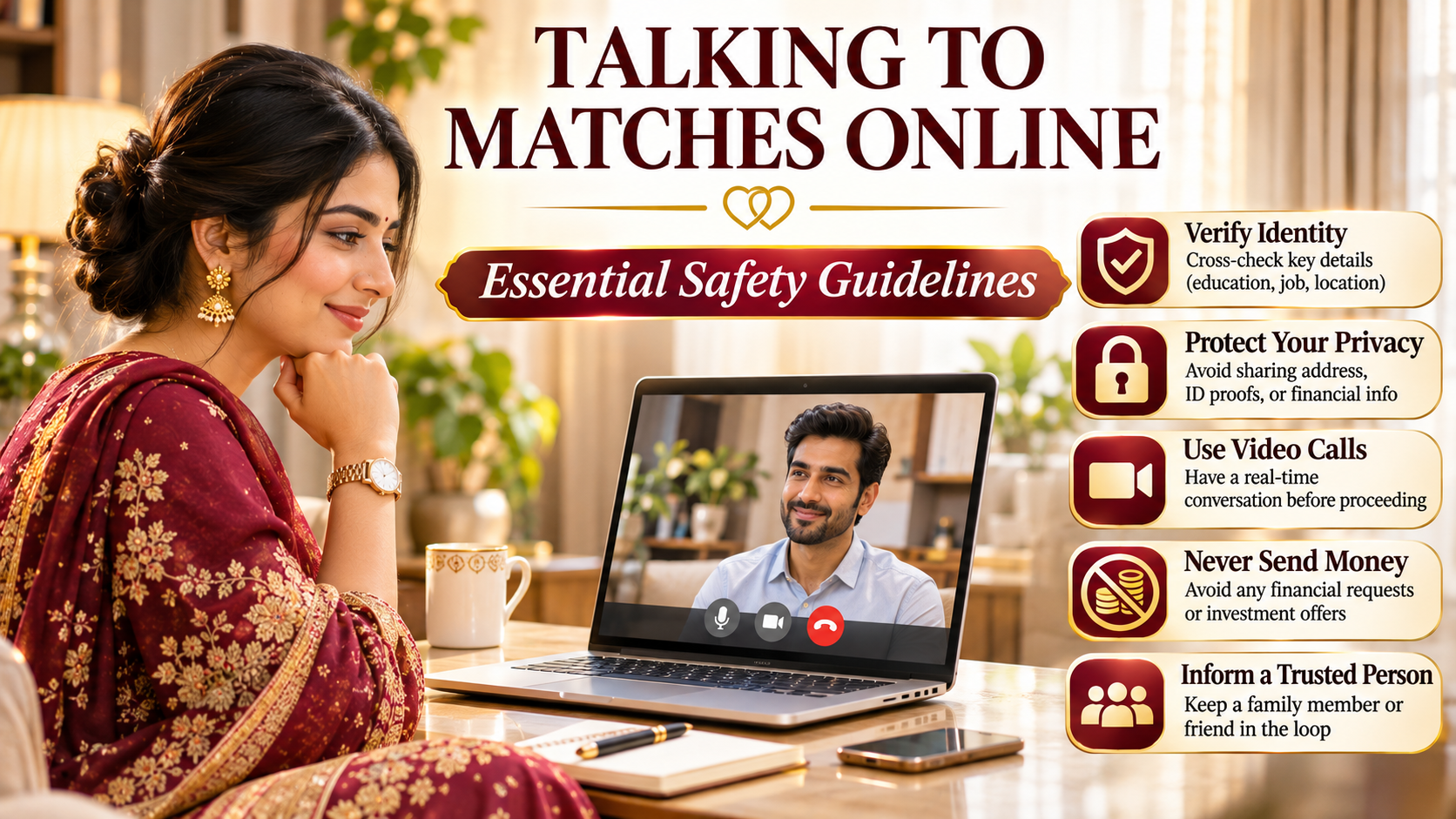
Before proceeding with serious matrimonial arrangements, take practical precautions.
- Review profile details for consistency.
- Conduct a reverse image search where appropriate.
- Arrange a video conversation.
- Verify important professional claims through independent sources.
- Discuss concerns with someone you trust.
- Avoid financial transactions with unverified contacts.
Verification can reduce risk, although no single check guarantees someone's intentions.
11. What to Do If You Have Already Sent Money
If you suspect fraud, act promptly.
Contact your bank or payment provider, explain the suspected fraudulent transaction, and request available recovery assistance.
Preserve screenshots, payment references, profile links, and conversation records.
In India, financial cyberfraud can be reported through 1930 or the National Cyber Crime Reporting Portal.
Reporting quickly may improve the possibility of intervention, although recovery is not guaranteed.
Conclusion: Genuine Relationships Should Not Require Financial Proof
Marriage involves trust, understanding, and emotional commitment, but financial demands should never become a test of sincerity.
Fraudsters exploit urgency, affection, and family expectations to encourage decisions that individuals might otherwise question.
Protect yourself by verifying important information, maintaining financial boundaries, and recognising suspicious requests.
A genuine matrimonial relationship should be built on mutual respect and honest intentions—not demands for money, expensive gifts, or investments.
Frequently asked questions
1. How do matrimonial scammers ask for money?
Scammers may invent medical emergencies, travel difficulties, customs charges, business problems, or wedding expenses. Others introduce fraudulent investments after gaining emotional trust. Urgent payment requests from unverified contacts are serious warning signs.
2. Should I send money to someone I met on a matrimonial website?
No. Avoid sending money to someone you know only through online matrimonial conversations, regardless of their promises or explanations. Verify their identity independently and maintain clear financial boundaries.
3. What is a matrimonial gift or customs scam?
A scammer claims to send an expensive gift or parcel, often from another country. Later, someone impersonating a courier or customs official demands payment for delivery, clearance, or taxes. The promised parcel may be fictitious.
4. Can a verified matrimonial profile still be involved in financial fraud?
Yes. A verification badge may confirm certain account details but does not guarantee honest intentions or verify every claim. Continue exercising caution when someone requests money, gifts, or investments.
5. How can I report matrimonial financial fraud in India?
Contact your bank immediately, preserve payment records and conversations, and report suspected fraud through cybercrime.gov.in or the national financial cyberfraud helpline 1930. Also report the suspicious account to the matrimonial platform.