Tradition, Belief, and Modern Marriage Decisions
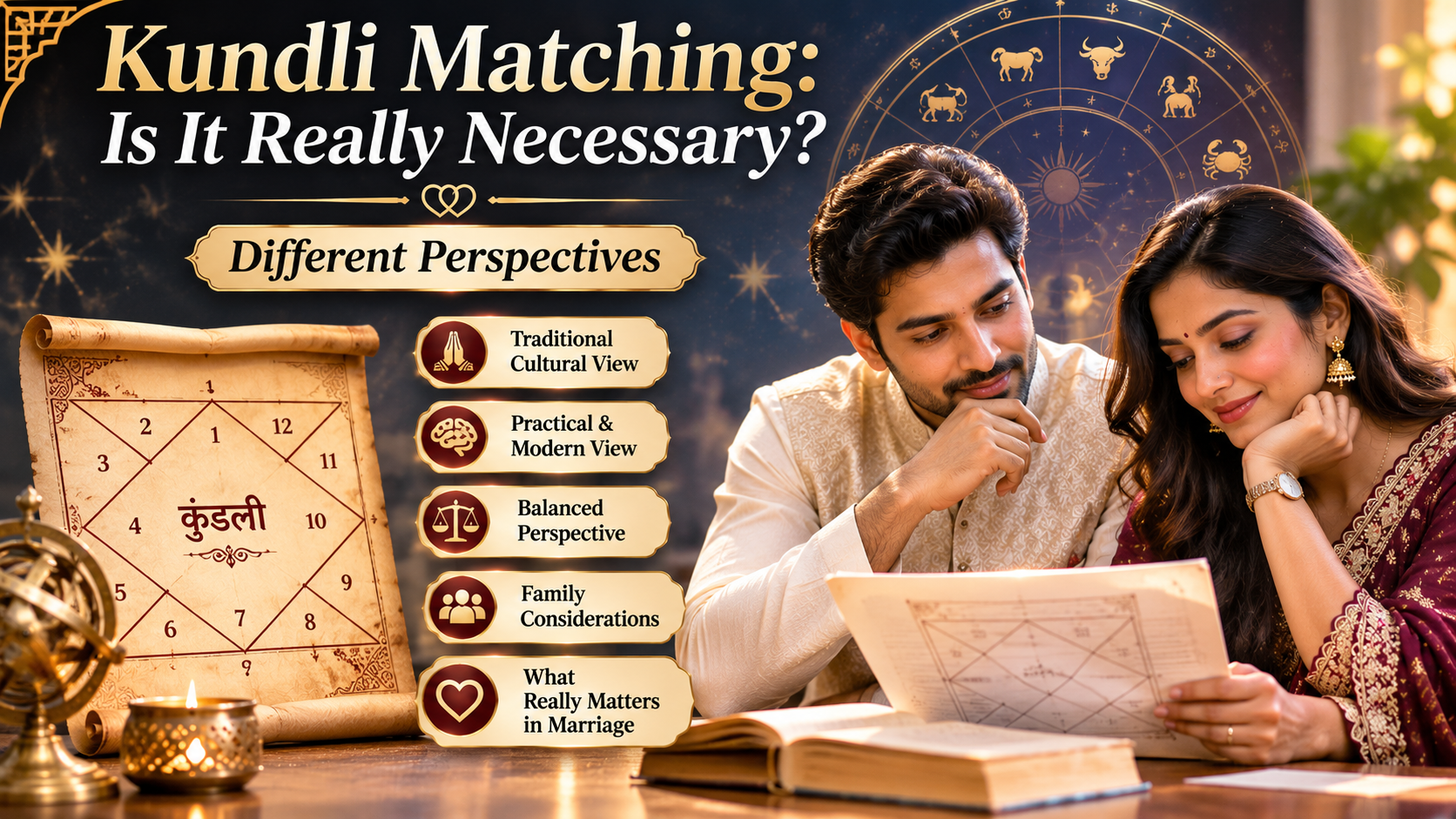
Kundli matching, also known as Kundali Milan or horoscope matching, has long been part of matrimonial traditions in many Hindu families. Before finalising a marriage proposal, families may compare the birth charts of prospective partners to assess their astrological compatibility.
However, modern couples increasingly question whether Kundli matching is essential for a successful marriage.
Some consider it a meaningful cultural and spiritual practice, while others prioritise emotional understanding, communication, shared values, and personal compatibility.
Understanding these perspectives can help individuals make informed marriage decisions without dismissing tradition or overlooking scientific evidence.
1. What Is Kundli Matching?
Kundli matching is a traditional practice associated with Hindu astrology, or Jyotish.
It involves comparing the birth charts of two prospective partners using their dates, times, and places of birth.
Astrologers interpret planetary positions and traditional compatibility factors to offer guidance about a proposed marriage.
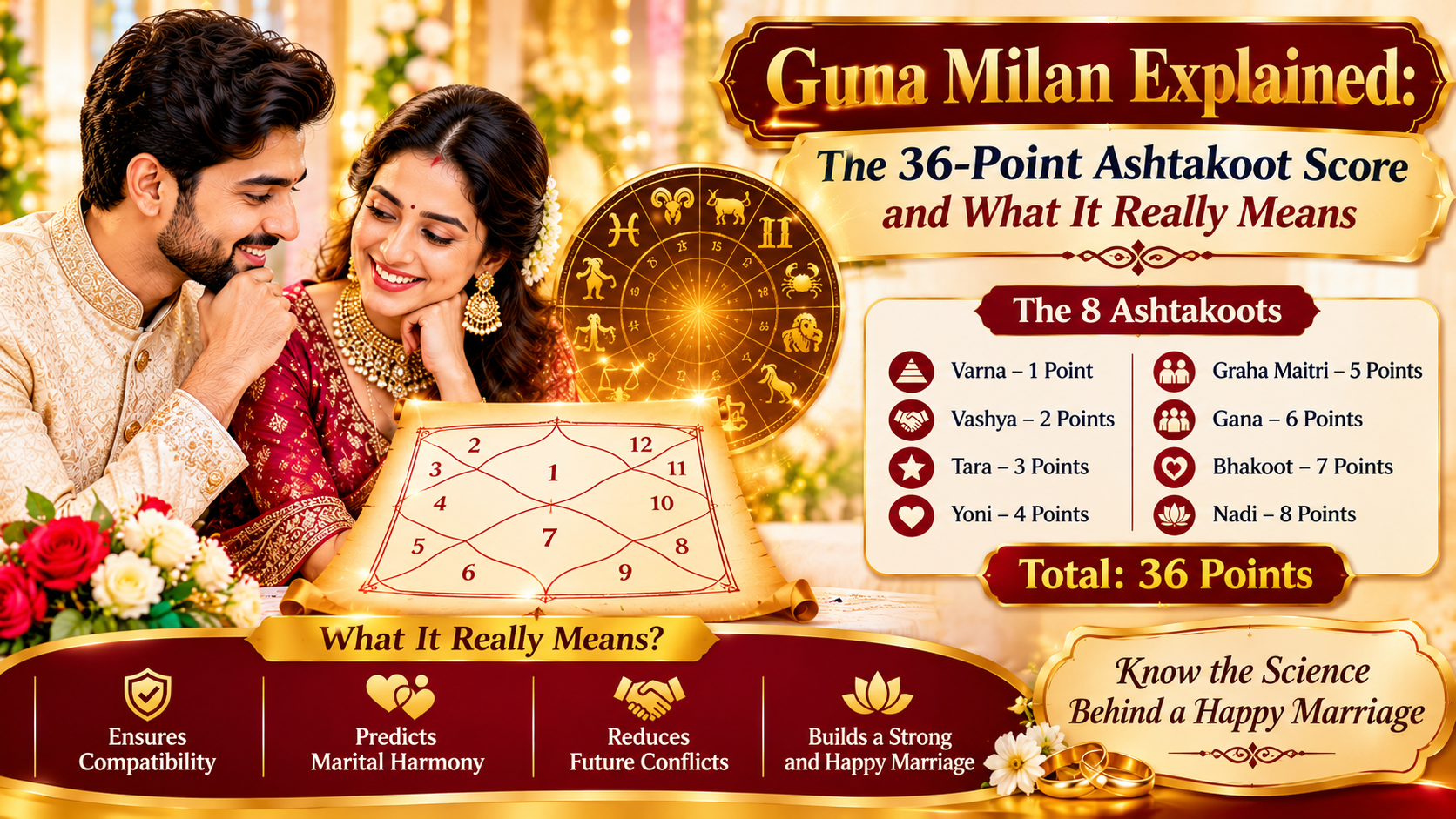
One widely used system is Ashtakoota Guna Milan, which evaluates eight traditional categories and assigns a maximum score of 36 points.
Tarashastra
Different regional traditions may follow other methods of horoscope comparison.
2. Understanding the 36 Guna Matching System
The Ashtakoota system evaluates eight categories traditionally associated with aspects of marital compatibility.
These include Varna, Vashya, Tara, Yoni, Graha Maitri, Gana, Bhakoot, and Nadi.
Each category carries a different number of points, adding up to 36.
Many practitioners traditionally regard 18 or more points as an acceptable starting score, although interpretations vary.
Importantly, 18 out of 36 is not a scientifically validated threshold for marital success.
A higher score should not be interpreted as a guarantee of happiness, nor should a lower score automatically disqualify a relationship.
3. The Traditional Perspective: Why Families Value Kundli Matching
For many families, Kundli matching represents continuity with cultural and religious traditions.
It may provide reassurance that important customary practices have been respected before marriage.
Some parents believe horoscope matching offers guidance about temperament, family harmony, and future circumstances.
Others regard it as a symbolic way to seek blessings and involve elders in marriage preparations.
These beliefs can hold genuine emotional significance, even when their predictive claims are not scientifically established.
Respecting tradition does not require treating astrological interpretations as certain facts.
4. The Scientific Perspective: Can Astrology Predict Marriage Success?
Scientific research has not established Kundli matching as a reliable method for predicting marital happiness or relationship longevity.
A peer-reviewed study published in Genus in 2020 examined astrological compatibility and marriage outcomes using more than 65,000 marriages in Swedish population records.
Researchers found no consistent evidence that astrologically favourable sun-sign combinations predicted partner selection or lower divorce risk.
However, this research examined Western sun-sign astrology, not the Indian Ashtakoota system specifically.
Therefore, it should not be presented as a direct experimental test of Guna Milan.
The evidence-based conclusion is that Kundli matching has not been scientifically validated as a predictor of successful marriage.
5. The Modern Couple's Perspective: Compatibility Beyond Horoscopes
Many individuals prefer evaluating compatibility through conversations, shared experiences, and practical expectations.
Important considerations include:
- Emotional maturity and communication habits.
- Personal values and lifestyle preferences.
- Career ambitions and relocation plans.
- Financial responsibilities and spending attitudes.
- Family expectations and living arrangements.
- Views about children and parenting.
These discussions help couples understand how they may approach everyday married life.
A horoscope cannot replace meaningful communication or independent decision-making.
6. Is Kundli Matching Necessary for Love Marriages?
In love marriages, couples may already have developed emotional understanding before involving their families.
Some still choose Kundli matching to respect family traditions.
Others prefer not to use astrology when deciding whether to marry.
Neither approach should automatically determine the couple's relationship.
When family beliefs differ from personal preferences, respectful discussion can help identify an acceptable way forward.
The final decision should remain voluntary and based on mutual consent.
7. What About Manglik Dosha?
Manglik Dosha, also called Mangal Dosha, is a traditional astrological concept associated with the placement of Mars in certain horoscope positions.
Some astrologers interpret it as relevant to marriage compatibility.
However, there is no established scientific evidence that Manglik status causes marital conflict, illness, or divorce.
Individuals should not be labelled unsuitable for marriage solely because of this classification.
Astrological concerns should never be used to create fear, discrimination, or pressure.
8. Can Kundli Matching and Practical Compatibility Coexist?
Yes. Couples who value astrology may choose to include Kundli matching as a cultural or spiritual practice while independently evaluating real-world compatibility.
For example, families may consult an astrologer while the prospective partners discuss career goals, finances, communication, and family responsibilities.
This approach allows traditional beliefs to coexist with practical relationship preparation.
However, astrological assessments should not override personal safety, mutual respect, or informed consent.
9. What Should Couples Prioritise Before Marriage?
Regardless of whether Kundli matching is performed, prospective partners should consider several essential questions.
Do they communicate respectfully during disagreements?
Are their expectations regarding finances, children, and family responsibilities compatible?
Do they respect each other's independence and career aspirations?
Are both individuals entering marriage willingly?
Can they address differences without intimidation or manipulation?
These questions provide meaningful insight into the partnership they hope to build.
Conclusion: Is Kundli Matching Really Necessary?
Kundli matching can hold cultural, spiritual, and emotional importance for families who follow the tradition.
However, it is not a scientifically established requirement for a successful marriage.
Couples may choose to consult horoscopes, consider them alongside practical factors, or proceed without them.
The most important considerations remain mutual consent, emotional compatibility, honest communication, shared responsibilities, and respect.
A strong marriage is built through the choices, behaviour, and commitment of two individuals—not guaranteed by a horoscope score.
Frequently asked questions
1. Is Kundli matching compulsory for Hindu marriage?
No. Kundli matching is a traditional practice followed by some Hindu families, but it is not a universal religious practice or a general legal requirement for Hindu marriage. Its importance depends on personal beliefs and family traditions.
2. How many Gunas should match for marriage?
In the traditional Ashtakoota system, compatibility is scored out of 36 Gunas. Many astrologers consider 18 or more points a conventional starting threshold. However, this score is not scientifically validated as a measure of marital success.
3. Can a marriage be successful without Kundli matching?
Yes. Kundli matching is not a prerequisite for a successful marriage. Couples can build healthy relationships through mutual respect, honest communication, shared values, emotional understanding, and responsible decision-making.
4. What happens if Kundli does not match?
A low Kundli score may concern families who follow astrological traditions, but it does not scientifically establish that a marriage will fail. Couples should consider their real-world compatibility and make decisions without coercion.
5. Is Manglik Dosha scientifically proven to affect marriage?
No. There is no established scientific evidence that Manglik Dosha causes divorce, marital conflict, or other negative relationship outcomes. It is a traditional astrological interpretation rather than a medically or scientifically validated risk factor.