Why Matrimonial Profile Verification Matters
Online matrimonial platforms have made it easier for individuals and families to connect with prospective life partners. However, the convenience of digital matchmaking also creates opportunities for identity theft, impersonation, financial fraud, and emotional manipulation.
In October 2025, India's Indian Cyber Crime Coordination Centre issued an advisory warning about criminals misusing matrimonial platforms to develop relationships and promote fraudulent investment schemes.
Cyber Crime Portal
A professional-looking profile does not automatically establish authenticity. Understanding warning signs can help individuals make safer decisions without unfairly judging genuine users.
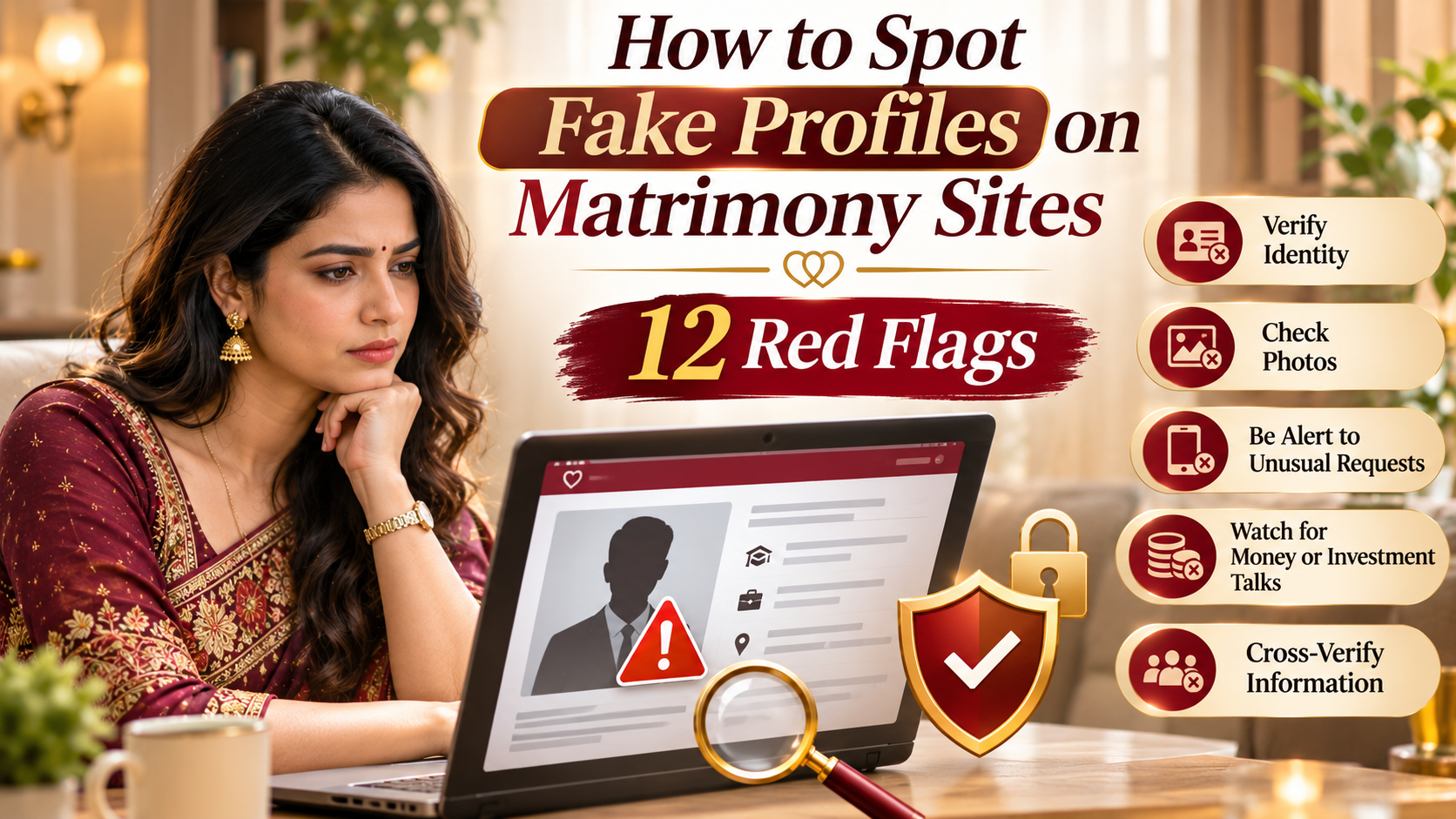
Here are twelve important red flags to recognise.
1. Unrealistically Perfect Profile Information
Be cautious when a profile presents extraordinary achievements, exceptionally high income, prestigious employment, and an ideal lifestyle without verifiable information.
Successful individuals certainly exist, but exaggerated claims combined with evasive answers deserve closer examination.
Safety tip: Verify relevant professional and educational details through appropriate, consent-based methods.
2. Stolen, Artificial, or Misleading Photographs
Fraudsters sometimes use photographs taken from social media, stock-image collections, or other people's profiles.
Artificially generated images can also make fictitious identities appear convincing.
Safety tip: Conduct a reverse image search using Google Lens or another reputable tool. A matching image under an unrelated identity warrants further investigation.
3. Inconsistent Personal Information
Watch for unexplained differences in age, occupation, educational qualifications, residential location, or family details.
For example, someone may claim to work in one country while repeatedly describing employment circumstances elsewhere.
Minor mistakes are possible, but significant contradictions should be clarified.
4. Repeated Refusal to Verify Identity
Some genuine users prefer privacy, particularly during initial matrimonial conversations.
However, repeated refusal to participate in any reasonable identity-verification process can be concerning.
Safety tip: Suggest a mutually convenient video conversation or verification through a trusted intermediary. A video call alone does not prove identity.
5. Unusually Fast Emotional Attachment
Scammers may express intense affection, promise marriage, or discuss lifelong commitment after very limited interaction.
This behaviour can create emotional dependence before important facts are verified.
The FBI identifies unusually rapid relationship development as a potential warning sign in romance fraud.
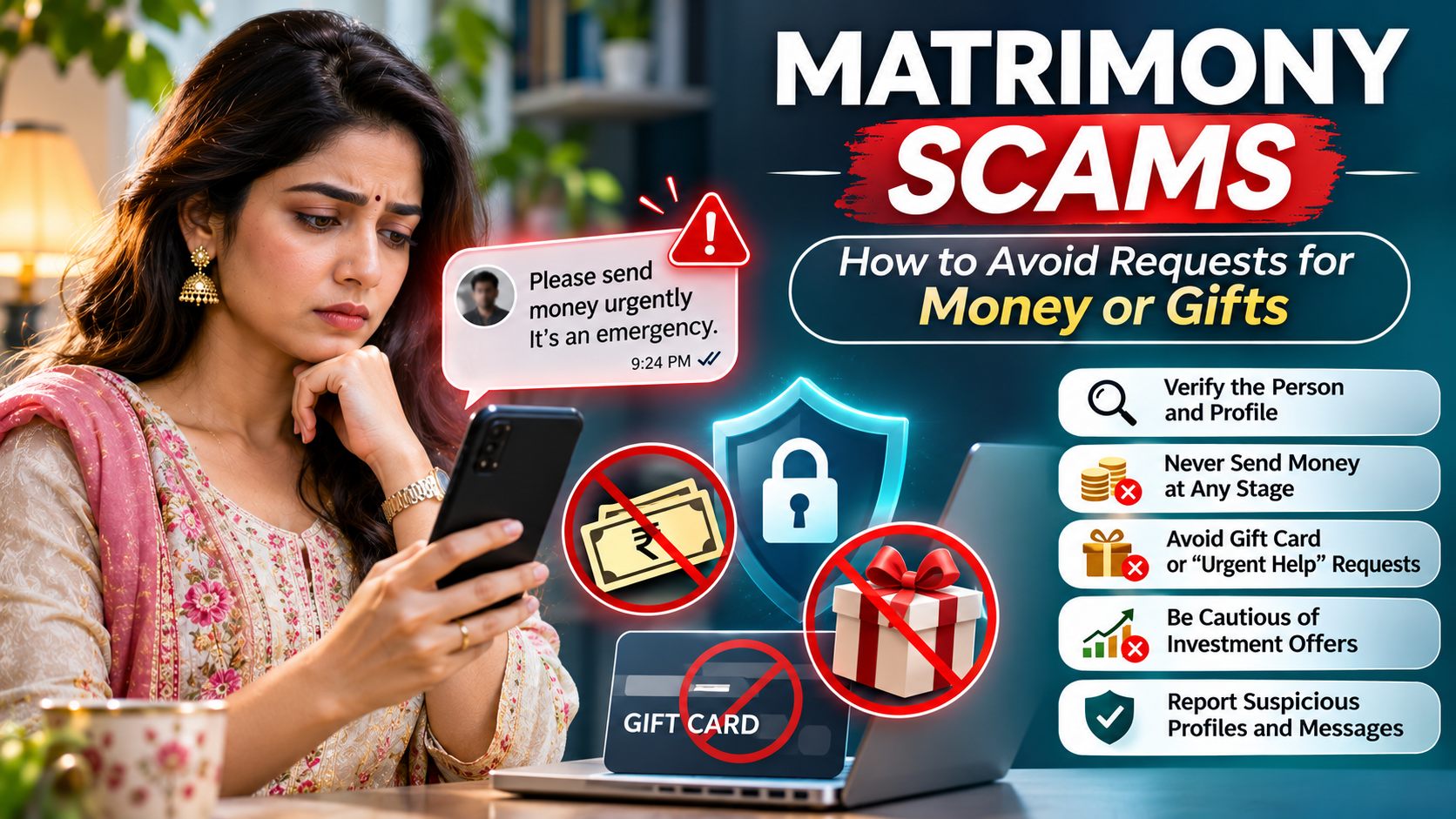
6. Requests for Money or Financial Assistance
Financial requests are among the strongest indicators of matrimonial fraud.
Common excuses include medical emergencies, international travel, customs charges, business problems, and temporary account restrictions.
Safety tip: Never transfer money, cryptocurrency, or gift cards to an unverified matrimonial contact.
7. Pressure to Move Conversations Off the Platform
A suspicious contact may immediately insist on communicating through private messaging applications rather than the matrimonial platform.
Moving conversations elsewhere can reduce access to platform reporting and moderation features.
Using WhatsApp is not inherently suspicious. The concern is persistent pressure combined with other warning signs.
8. Suspicious Overseas or NRI Claims
Some fraudulent profiles claim overseas employment, international business ownership, or prestigious foreign professional positions.
They may repeatedly use travel restrictions or work commitments to avoid reasonable verification.
Safety tip: Independently check employment and professional claims when relevant. Never assume someone is fraudulent simply because they live abroad.
9. Avoidance of Family Introductions
Family participation is common in Indian matrimonial processes, although not everyone wants relatives involved immediately.
Concern arises when someone repeatedly changes stories about family members, invents conflicting explanations, or refuses all reasonable introductions after serious marriage discussions.
Respect privacy while evaluating consistency.
10. Requests for Sensitive Documents or Personal Information
Fraudsters may request Aadhaar details, PAN information, banking credentials, passwords, OTPs, or private photographs.
Such information can enable identity theft, financial fraud, or blackmail.
Safety tip: Never disclose passwords or OTPs. Share identity documents only when genuinely necessary through trusted, secure procedures.
11. Investment Opportunities Disguised as Relationship Advice
A prospective partner may introduce cryptocurrency trading, investment applications, or supposedly guaranteed financial returns.
India's 2025 cybercrime advisory specifically warned about matrimonial contacts being used to lure victims into fraudulent investment schemes.
Safety tip: Keep matrimonial conversations separate from financial investments, especially when someone pressures you to act urgently.
12. Pressure, Secrecy, or Emotional Manipulation
Fraudsters may demand immediate commitment, discourage discussions with trusted relatives, or insist that financial requests remain secret.
Some threaten to end the relationship when questioned.
A genuine prospective partner should respect reasonable boundaries and allow sufficient time for important decisions.
How to Verify a Matrimonial Profile Safely
Before proceeding toward engagement or marriage, consider these practical verification steps:
- Compare profile information with independently available professional or educational details.
- Check photographs for possible impersonation using reverse image search.
- Arrange a mutually agreed video conversation and, when appropriate, a safe in-person meeting.
- Discuss family background, employment, marriage expectations, and long-term plans.
- Seek consent-based verification of important claims without collecting unnecessary private documents.
- Consult trusted people if inconsistencies or financial demands arise.
Remember that profile verification reduces risk but cannot guarantee someone's intentions or future behaviour.
What to Do If You Suspect Matrimonial Fraud
Stop sharing personal information and avoid making payments.
Preserve relevant screenshots, profile links, messages, transaction references, and other evidence. Report the suspicious account to the matrimonial platform.
In India, suspected cybercrime can be reported through the National Cyber Crime Reporting Portal. For urgent financial cyberfraud, contact the national helpline 1930 promptly.
The government's reporting guidance specifically recognises online matrimonial fraud as a reportable cybercrime category.
Conclusion: Trust Should Be Built Through Verification
Finding a life partner requires emotional openness, but personal safety should remain a priority.
Fake matrimonial profiles can appear convincing, and scammers may invest considerable time in developing trust.
Recognising suspicious behaviour, independently checking important claims, protecting financial information, and respecting personal boundaries can make matrimonial searches safer.
A genuine relationship should grow through honesty, mutual respect, transparency, and trust—not secrecy, pressure, or financial demands.
Frequently asked questions
1. How can I identify a fake matrimonial profile?
Look for inconsistent personal details, stolen photographs, unverifiable professional claims, repeated avoidance of reasonable verification, and suspicious financial requests. No single warning sign proves fraud, so evaluate multiple indicators carefully.
2. Can a verified matrimonial profile still be fake?
Yes. A verification badge may confirm a particular detail, such as a phone number or identity document, but it does not necessarily establish the accuracy of every claim or guarantee genuine intentions.
3. How can I verify an NRI matrimonial profile?
Check relevant employment details, professional qualifications, location claims, and identity information through appropriate, consent-based methods. Arrange video conversations and seek independent confirmation of important details before making commitments.
4. What should I do if someone asks for money on a matrimony site?
Avoid transferring money or sharing banking information. Preserve relevant messages, stop engaging with suspicious requests, and report the account. In India, suspected financial cyberfraud can be reported through 1930 or cybercrime.gov.in.
5. How can I report a fake matrimonial profile in India?
Report the suspicious account to the matrimonial platform and preserve screenshots, profile links, messages, and payment records. Suspected matrimonial cyberfraud can also be reported through India's National Cyber Crime Reporting Portal.