India is a country of diverse cultures, languages, religions, traditions and social communities. Marriage is often considered not only a relationship between two individuals but also a meaningful connection between families. Many marriage-minded individuals prefer finding a life partner who understands their cultural background, traditions, lifestyle and family values.
Community matrimony provides a focused approach to finding suitable marriage prospects within a preferred cultural, religious, linguistic or social community. With the development of digital matrimonial platforms and personalised matchmaking services, individuals can now combine traditional values with modern relationship expectations.
What Is Community Matrimony?
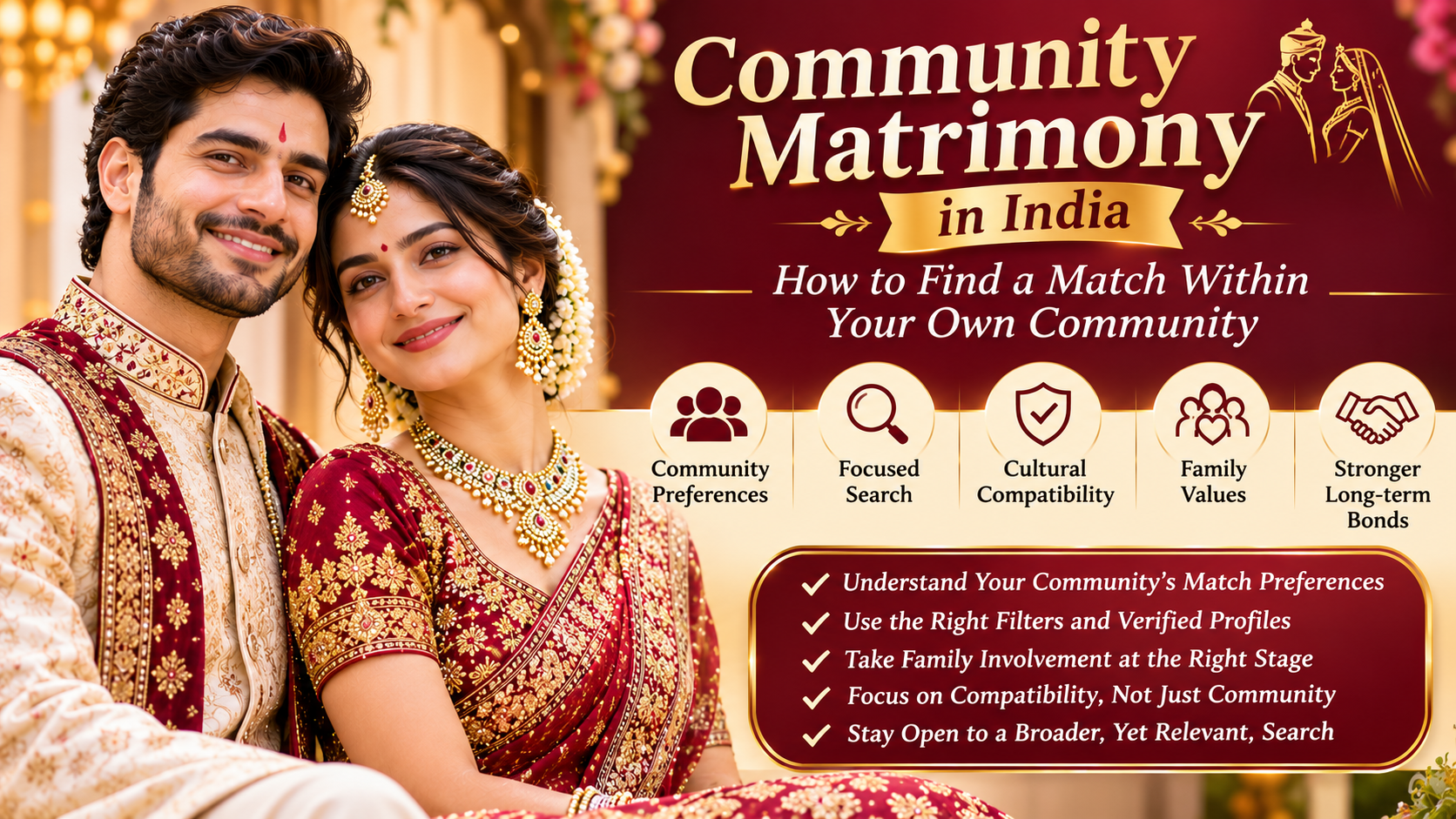
Community matrimony refers to the process of searching for a life partner within a particular community, religion, linguistic group or cultural background.
In India, matrimonial preferences are often influenced by family traditions, regional customs, religious practices, food habits, language and lifestyle choices.
Community-based matchmaking helps individuals explore marriage prospects who may share these preferences. However, belonging to the same community does not automatically guarantee compatibility. Personal values, emotional understanding, mutual respect and future aspirations are equally important.
Why Is Community Matrimony Popular in India?
Community matrimony remains a familiar approach for many Indian families because of the importance placed on cultural identity and family traditions.
Individuals may feel more comfortable with partners who understand their festivals, customs, religious practices and family expectations.
Shared cultural experiences can make certain aspects of married life easier to navigate. Families may also appreciate familiar traditions during wedding ceremonies and other important occasions.
Nevertheless, modern marriage decisions increasingly consider education, career goals, emotional maturity, independence and personal compatibility alongside community preferences.
Popular Community Matrimony Categories in India
India has numerous matrimonial communities reflecting its rich cultural diversity. Some commonly searched categories include:
- Brahmin, Rajput, Agarwal, Kayastha and Baniya matrimony.
- Punjabi, Jat, Sikh and Khatri matrimony.
- Gujarati, Marathi, Bengali and Sindhi matrimony.
- Tamil, Telugu, Kannada and Malayalam matrimony.
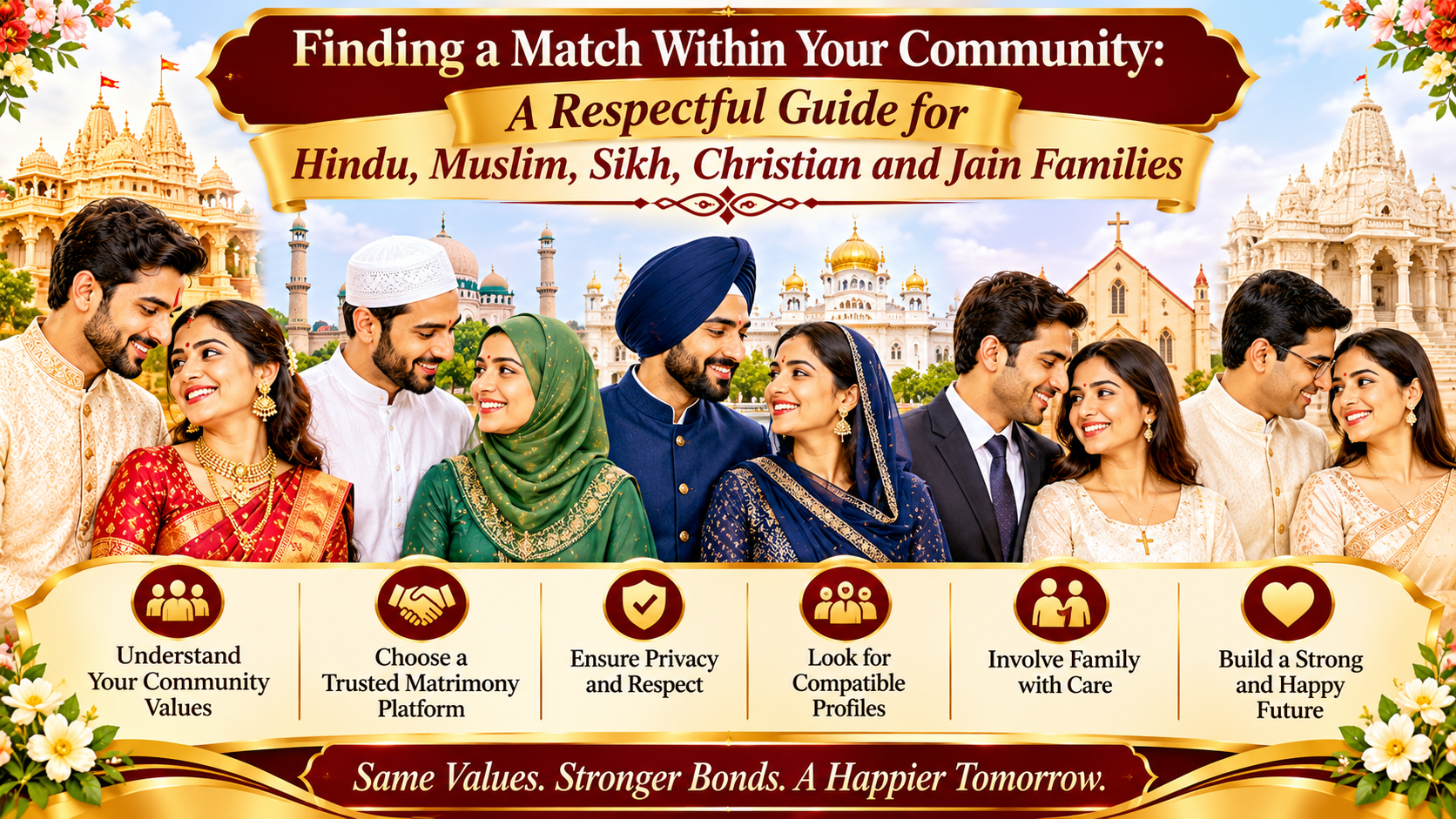
- Jain, Hindu, Muslim, Christian and Buddhist matrimony.
- Regional and community-based NRI matrimony.
These categories can help individuals narrow their searches according to personal preferences. Every community contains diverse individuals, and marriage decisions should be based on mutual interest rather than assumptions about someone's background.
How to Find a Match Within Your Own Community
1. Define Your Partner Preferences
Before beginning your matrimonial search, identify the qualities that matter most to you. Consider education, profession, personality, lifestyle, location, family values and long-term relationship expectations.
Distinguish essential requirements from flexible preferences to avoid unnecessarily limiting your opportunities.
2. Create an Honest Matrimonial Profile
A well-written matrimonial profile should include accurate information about your education, profession, interests, family background and marriage expectations.
Use recent photographs and describe your personality naturally. Avoid exaggerating financial status, professional achievements or personal qualities.
3. Explore Community Matrimonial Platforms
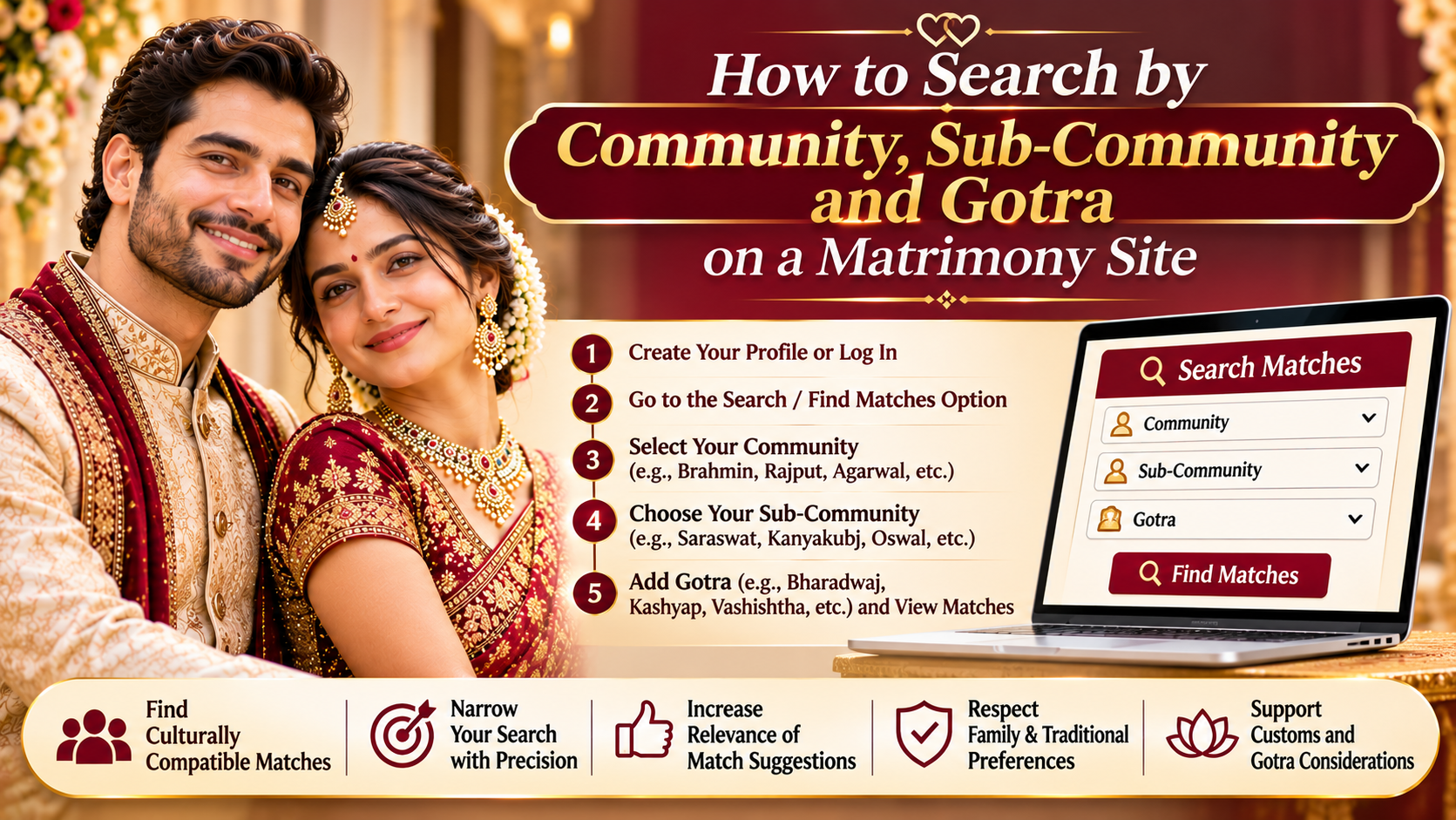
Online matrimonial platforms allow individuals to search for potential partners using community, religion, language, location, education and professional filters.
These tools can help expand your search beyond your immediate social circle, particularly when looking for matches in different cities or countries.
4. Use Family and Community Networks
Relatives, trusted friends, community associations and social gatherings can provide valuable matrimonial introductions.
Family networks may help identify suitable prospects, but individuals should always have the freedom to make their own marriage decisions without pressure.
5. Consider Personalised Matchmaking
Professional matchmaking services can assist individuals who prefer a more structured and confidential partner search.
A personal matchmaker may help shortlist suitable profiles, coordinate introductions and understand individual preferences while respecting privacy and mutual consent.
Benefits of Community-Based Matchmaking
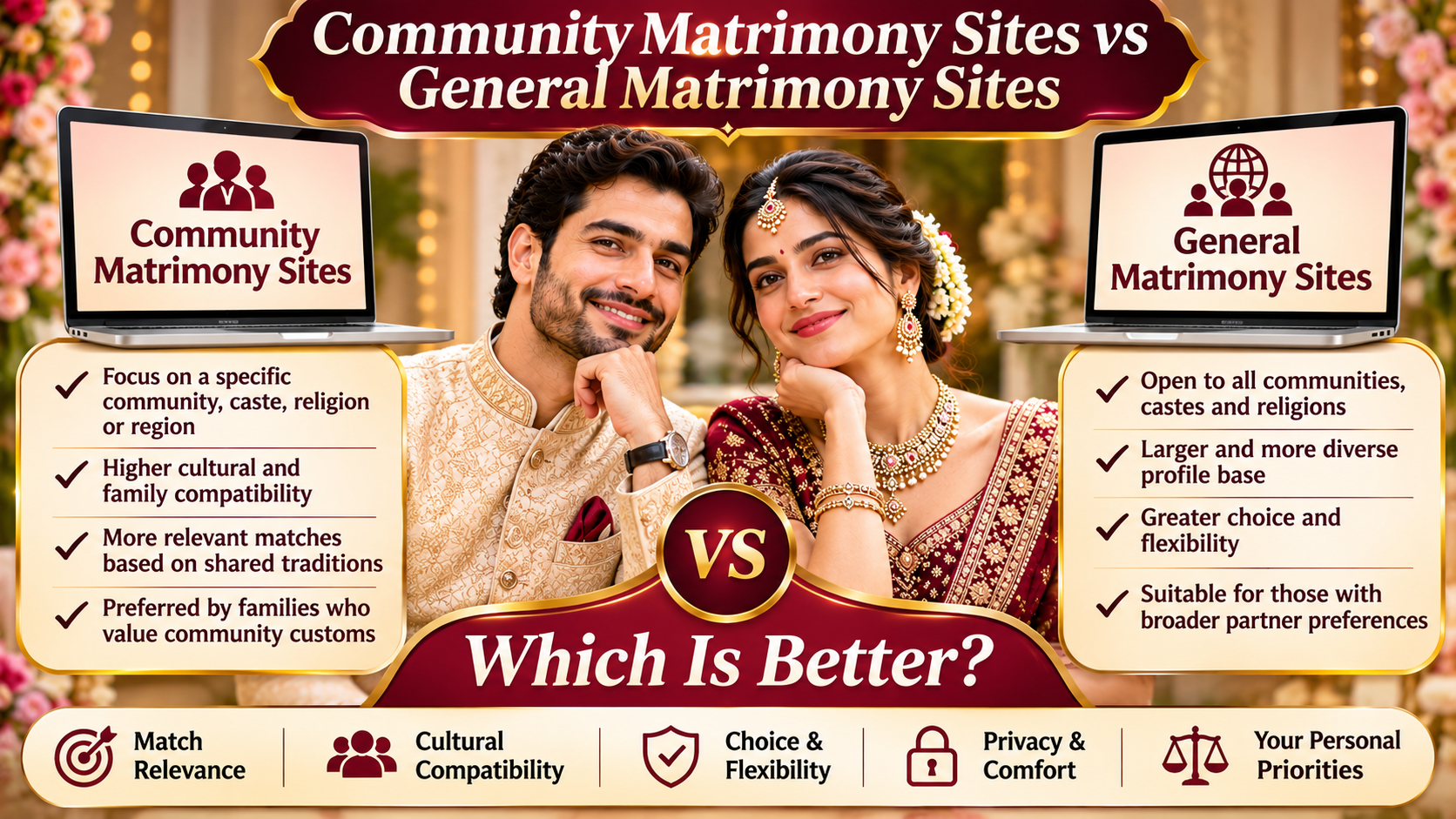
Community matrimony may offer several advantages, including familiarity with cultural traditions, shared language, similar food preferences and easier coordination of traditional wedding ceremonies.
Individuals may also find common ground when discussing religious practices, festivals and family responsibilities.
However, these similarities should be viewed as potential advantages rather than guarantees of marital happiness. Every individual has unique beliefs, experiences and expectations that deserve respect.
Important Factors Beyond Community Compatibility
Finding someone from the same community is only one aspect of choosing a life partner. Couples should also discuss career plans, financial responsibilities, living arrangements, family involvement, children and personal independence.
Emotional maturity, communication skills and conflict resolution are essential for building a healthy relationship.
Take sufficient time to understand each other before making a commitment. A compatible marriage requires shared understanding, trust and the willingness to support each other's personal growth.
Safety Tips for Community Matrimonial Searches
Always verify important profile information independently before making serious commitments. Avoid sharing sensitive financial information, identity documents or passwords with unfamiliar individuals.
Arrange initial meetings in comfortable public locations and inform someone you trust.
Be cautious of requests for money, inconsistent personal information or pressure to make immediate marriage decisions. Genuine relationships develop through transparency, patience and mutual respect.
Conclusion
Community matrimony in India offers a meaningful way to explore marriage opportunities while maintaining connections with cultural traditions and family values.
By combining traditional community networks with modern matrimonial technology and personalised matchmaking, individuals can discover a wider range of potential life partners.
While shared cultural backgrounds may provide a familiar foundation, a successful marriage ultimately depends on emotional compatibility, mutual respect, honest communication and shared aspirations.
The best matrimonial decision is one made freely by both individuals, with confidence, understanding and a genuine commitment to building a happy future together.
Frequently asked questions
1. What is community matrimony in India?
Community matrimony is a matchmaking approach that helps individuals find potential life partners within a preferred religious, cultural, linguistic or social community while considering personal compatibility and marriage expectations.
2. How can I find a marriage partner within my own community?
You can find suitable marriage prospects through community matrimonial websites, family networks, social associations, matrimonial events and personalised matchmaking services.
3. What are the benefits of community matrimony?
Community matrimony may offer shared cultural traditions, familiar languages, similar religious practices and common family expectations. However, emotional compatibility and mutual understanding remain essential for a successful marriage.
4. Can NRIs find community-based matrimonial matches in India?
Yes. NRIs can explore community-based matrimonial matches in India and internationally through online matrimonial platforms, community associations, family networks and professional matchmaking services.
5. Is marrying within the same community necessary for a successful marriage?
No. A successful marriage depends on mutual respect, trust, emotional compatibility, communication and shared life goals. Community preferences are a personal choice, not a requirement for marital happiness.