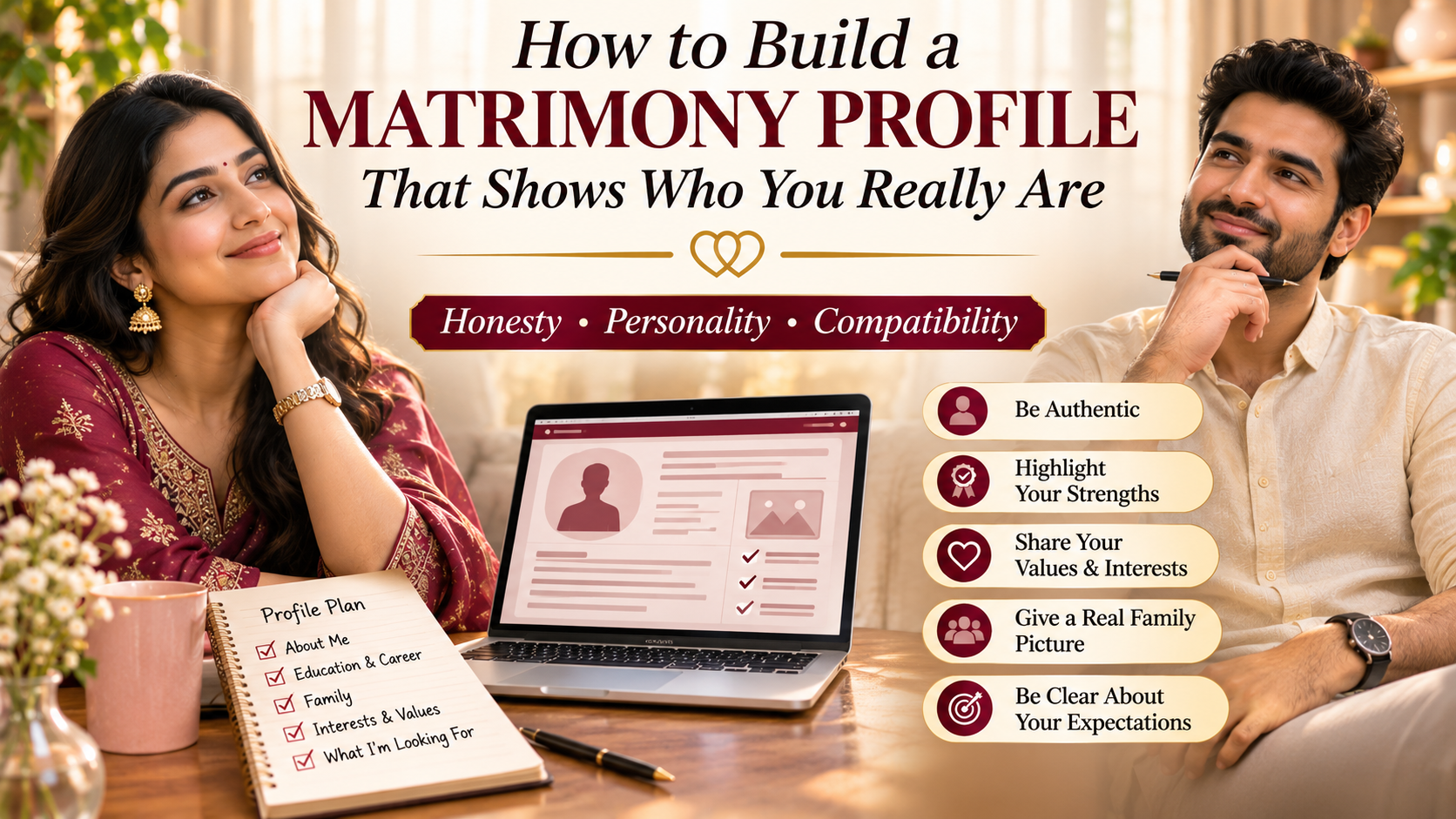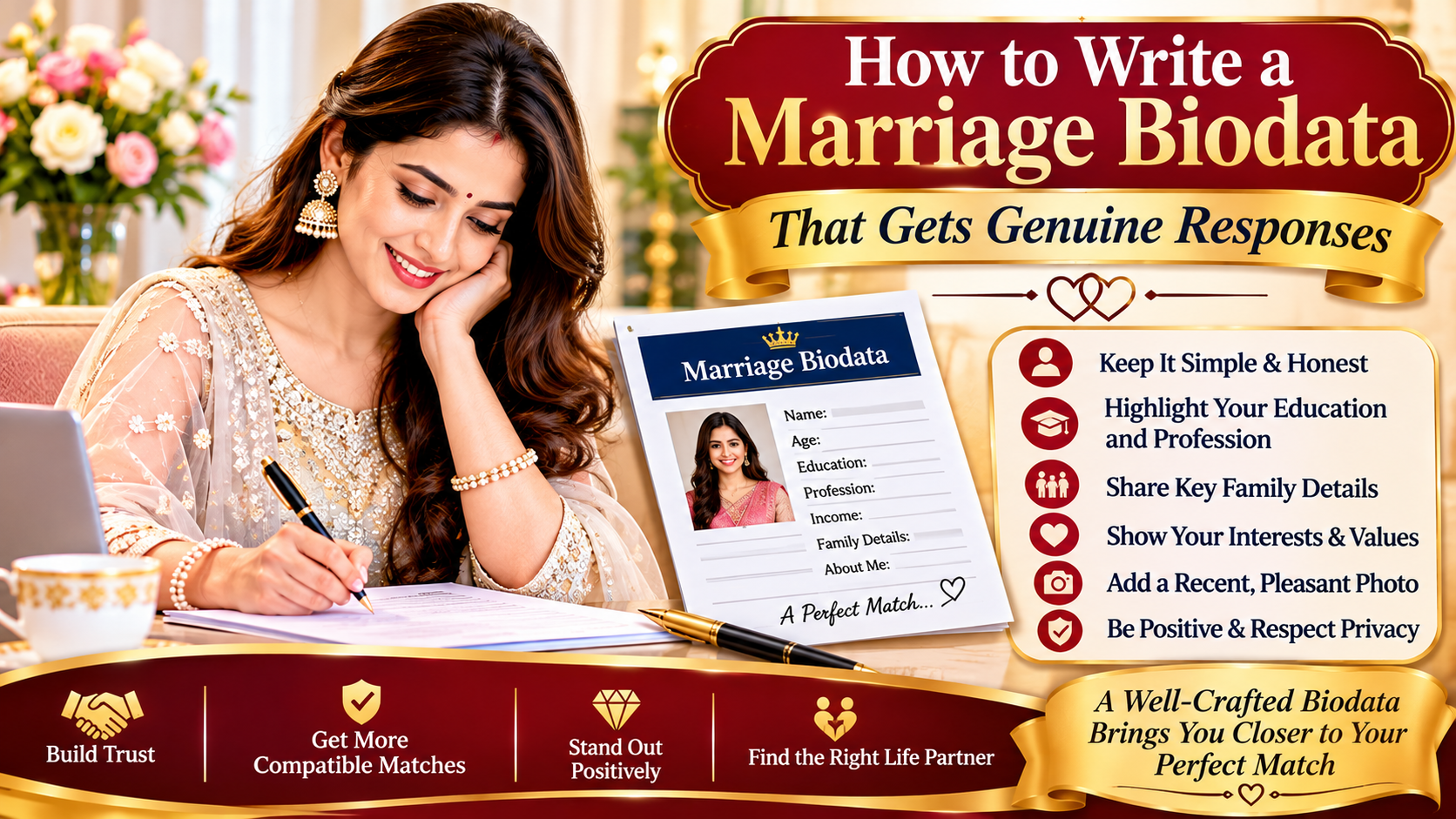
A marriage biodata is often the first impression a family gets of you. In a few minutes, a reader decides whether to read further or move on. A clear, truthful and well-organised biodata saves time for everyone and attracts families who are genuinely compatible with yours.
What a good biodata should do
Your biodata should answer the basic questions a family naturally asks, present you honestly and signal what kind of partner and family you are looking for. It should not read like an advertisement or a legal document. The goal is clarity and warmth, not exaggeration.
Essential sections to include
Personal details. Full name, date of birth, height, complexion if you wish to mention it, languages spoken, diet and your current city. Keep this section factual and brief.
Education. List your highest qualifications and the institutions where you studied. Mention any professional certifications that are relevant.
Profession. State your designation, the type of organisation and the field you work in. Mention income only in a broad range if you choose to include it, and avoid sharing exact figures or employer-sensitive information.
Family details. Mention your parents' occupations, siblings and their marital status, and your family's native place. Keep descriptions respectful and simple.
Religion, community and horoscope details. Include these if they matter to your family. Add birth time and place only if you plan to use kundli matching, and share them selectively.
Interests and lifestyle. Two or three genuine interests, such as travel, cooking or music, make you feel like a real person. Avoid long lists of generic hobbies.
Partner expectations. Describe what you are looking for in a realistic and respectful way. Focus on values, outlook and compatibility instead of a rigid checklist.
Contact information. Provide a parent's or family contact number, or use the platform's messaging, instead of publishing personal details widely.
Writing an effective "About me" section
A short paragraph of four to six lines is enough. Describe your personality, your approach to family and career, and what you value in life. Avoid clichés such as "simple but modern" without any supporting detail. For example, you might write that you enjoy weekend cooking with family, are focused on a growing career in engineering and value open communication in relationships. Specific details feel honest and memorable.
Choosing the right photographs
Use recent, clear and natural photographs. A well-lit portrait and one full-length photograph are usually enough. Avoid heavy filters, group photos in which you are hard to identify, sunglasses and old pictures. Misleading photographs create distrust the moment you meet.
Be honest, including about difficult topics
If you have been married before, have health conditions that affect a partner or have significant financial responsibilities, address them truthfully at the right stage. Hiding major facts may bring early interest, but it damages trust and often ends the relationship later with greater pain.
Protect your privacy
Do not publish your full home address, identity document numbers, bank information or exact workplace details. Share contact information gradually as trust builds. If you circulate your biodata through messaging apps, remember that it can be forwarded without your control.
Formatting tips
- Keep it to one page whenever possible
- Use clear headings and consistent fonts
- Save and share it as a PDF so layout stays intact
- Proofread for spelling and factual errors
- Update it when anything changes, such as a job or city
Common mistakes to avoid
- Exaggerating income, status or achievements
- Listing very long or unrealistic expectations
- Using vague language that says nothing about you
- Sharing too much personal information too early
- Copying a template without personalising it
Final thoughts
The best biodata is honest, concise and warm. It helps the right families recognise a good fit and politely filters out those who are not. Spend time on it, ask a trusted friend to review it, and treat it as a living document you improve as you learn what works.
Frequently asked questions
1. How long should a marriage biodata be?
One page is ideal. It should be detailed enough to be informative and short enough to be read quickly.
2. Should I mention my salary in my biodata?
You may mention a broad range or annual package band, but avoid exact figures. You can share more details once both families are serious.
3. Is it necessary to include horoscope details?
Only if your family uses kundli matching. If you include birth details, share them with care and consider adding them at a later stage.
4. What is the best way to describe partner expectations?
Focus on values, outlook and lifestyle compatibility. Keep the list short, realistic and respectful.
5. How often should I update my biodata?
Update it whenever your job, education, city or family circumstances change, and review it at least every few months during an active search.