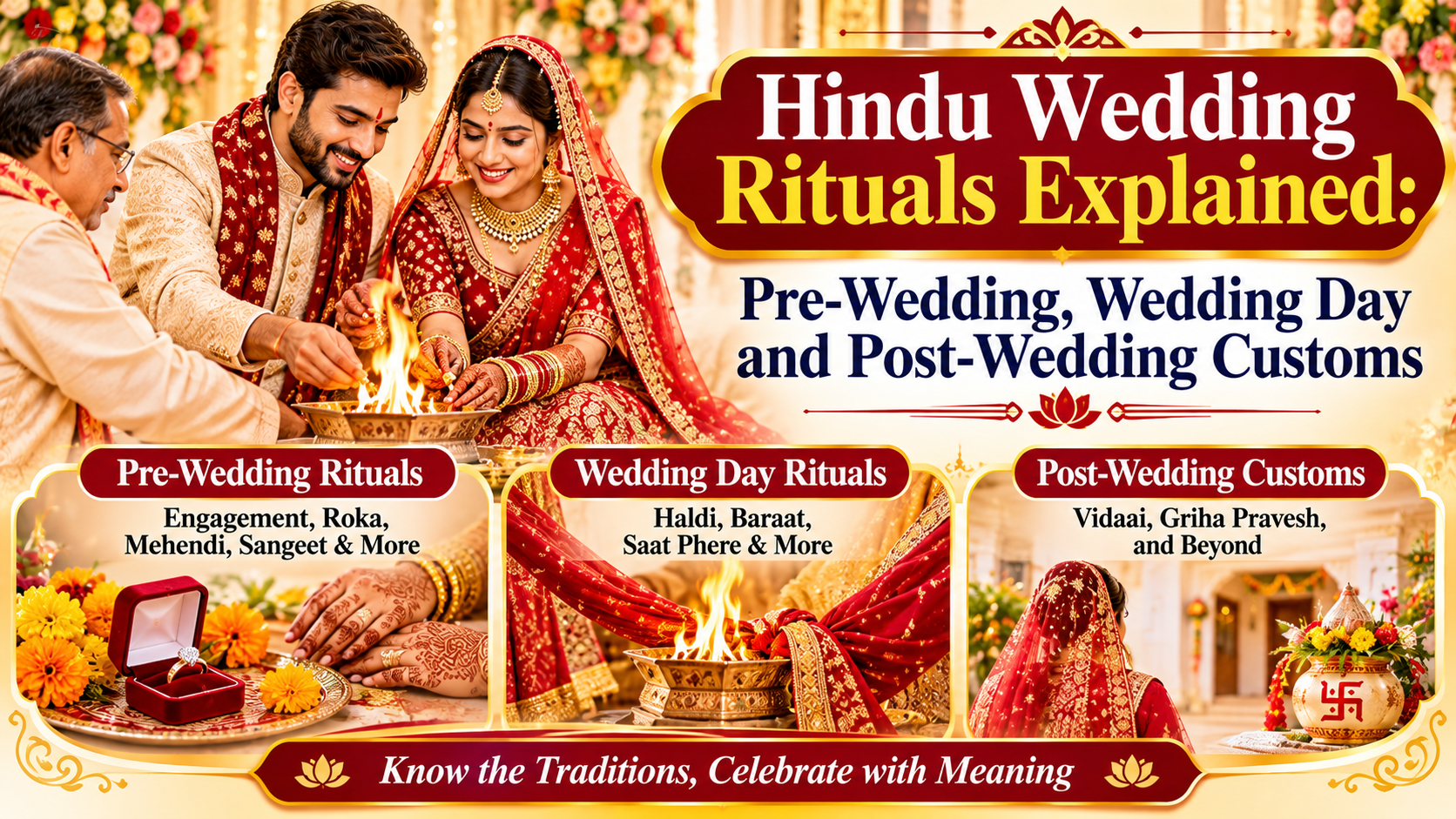
Indian weddings are a series of rituals stretching across several days, and each one carries a meaning that has been passed down through generations. Customs differ by region, language and family, so the sequence you follow may not match a neighbour's. This guide explains the most common Hindu wedding rituals so that couples and guests understand what is happening and why.
Pre-wedding rituals
Roka or Sagai. This marks the formal agreement between the two families. Gifts, sweets and blessings are exchanged, and in many communities it is regarded as the official engagement. Some families also hold a separate ring ceremony.
Wedding invitation and Ganesh puja. Families often begin the wedding preparations by worshipping Lord Ganesha, seeking blessings for a smooth ceremony. The first invitation is traditionally offered to the family deity.
Haldi. A paste of turmeric, sandalwood and other ingredients is applied to the bride and groom. It is believed to bring glow, purification and good fortune. It is usually a joyful event with close family and friends.
Mehndi. Intricate henna designs are applied to the bride's hands and feet. Many families see the colour of the mehndi as a symbol of affection, and the designs may include hidden initials or motifs. Women from both families usually gather for singing and celebration.
Sangeet. A musical evening of songs, dance and performances that helps both families bond. It has become one of the most anticipated events in modern weddings, although its roots lie in traditional folk songs.
Wedding day rituals
Baraat and Milni. The groom arrives with his family and friends in a procession, often with music and dancing. At the venue, relatives from both sides greet each other in the milni, symbolising the coming together of the families.
Jaimala or Varmala. The bride and groom exchange garlands as a sign of acceptance and respect for each other.
Kanyadaan. The bride's parents give their daughter's hand to the groom, expressing trust and blessing. Many modern families discuss the meaning of this ritual and adapt or reinterpret it according to their values.
Pheras or Saptapadi. The couple walks around the sacred fire, taking vows. In the saptapadi, seven steps represent promises relating to nourishment, strength, prosperity, happiness, family, long life and lasting companionship. In many Hindu marriages, the saptapadi is considered the central element that completes the marriage. Some regional traditions use four or other numbers of rounds.
Sindoor and Mangalsutra. The groom applies vermilion to the bride's hair parting and ties a sacred necklace around her neck. In several regions, these symbolise marriage, though forms differ, and in some communities other symbols such as a bangle, toe ring or a specific necklace are used.
Blessings and Ashirwad. Elders bless the couple, and the priest concludes the ceremony with prayers. Photographs, gifts and a celebratory meal often follow.
Post-wedding rituals
Vidaai. The bride leaves her parental home, usually with an emotional farewell. She may throw rice or grains over her shoulder, symbolising gratitude to her parents and wishes for their prosperity.
Griha Pravesh. The bride is welcomed at the groom's house, often after a ritual such as gently tipping a vessel of rice at the threshold. It marks her entry into the new household.
Reception. A celebration hosted by the groom's family to introduce the couple to extended family, friends and colleagues.
Pag Phera or Muklawa. The bride visits her parental home soon after the wedding, accompanied by her husband in many traditions.
Why regional variations matter
A Bengali wedding includes the shubho drishti and the exchange of garlands in a distinctive style. A South Indian wedding may feature the kashi yatra, oonjal and the tying of the thali. A Gujarati wedding includes the jaan and ponkhwu. A Punjabi wedding may feature chooda and kalire. These variations are part of what makes each wedding special, and families should follow what feels meaningful to them.
Balancing tradition with modern preferences
Many couples today select the rituals that matter to them and shorten or simplify others. A frank discussion between both families helps avoid disagreements. Ask a priest or an elder to explain the meaning of each ritual, because understanding the reason behind a custom often makes it more meaningful.
Tips for guests
- Arrive on time for the main ceremony
- Dress modestly and appropriately for each event
- Follow the family's lead on rituals and photographs
- Switch your phone to silent during the ceremony
Other communities
Muslim, Christian, Sikh, Jain and other communities follow their own traditions such as nikah, church ceremonies, Anand Karaj and community-specific rites. Respect for these differences is important, especially in inter-community marriages.
Final thoughts
Rituals are a way of expressing faith, family bonds and hopes for the couple's future. Whether you follow every custom or choose a simpler path, understanding their meaning helps you take part with sincerity and joy.
Frequently asked questions
1. What is the most important ritual in a Hindu wedding?
In many traditions the saptapadi, or seven steps around the sacred fire, is considered the central ritual that completes the marriage.
2. What is the purpose of the haldi ceremony?
Haldi is a blessing and beautifying ritual, believed to purify and bring good fortune to the couple before the wedding.
3. Can wedding rituals be shortened?
Yes. Many families shorten or simplify rituals while keeping the essential ones. Discuss this with elders and the priest in advance.
4. What does kanyadaan mean?
It refers to the bride's parents giving her hand in marriage with blessings. Some modern couples adapt the ritual to reflect equality.
5. Do rituals differ across regions?
Yes. Names, sequence and symbols vary by region, language and community, so always follow your own family's tradition.