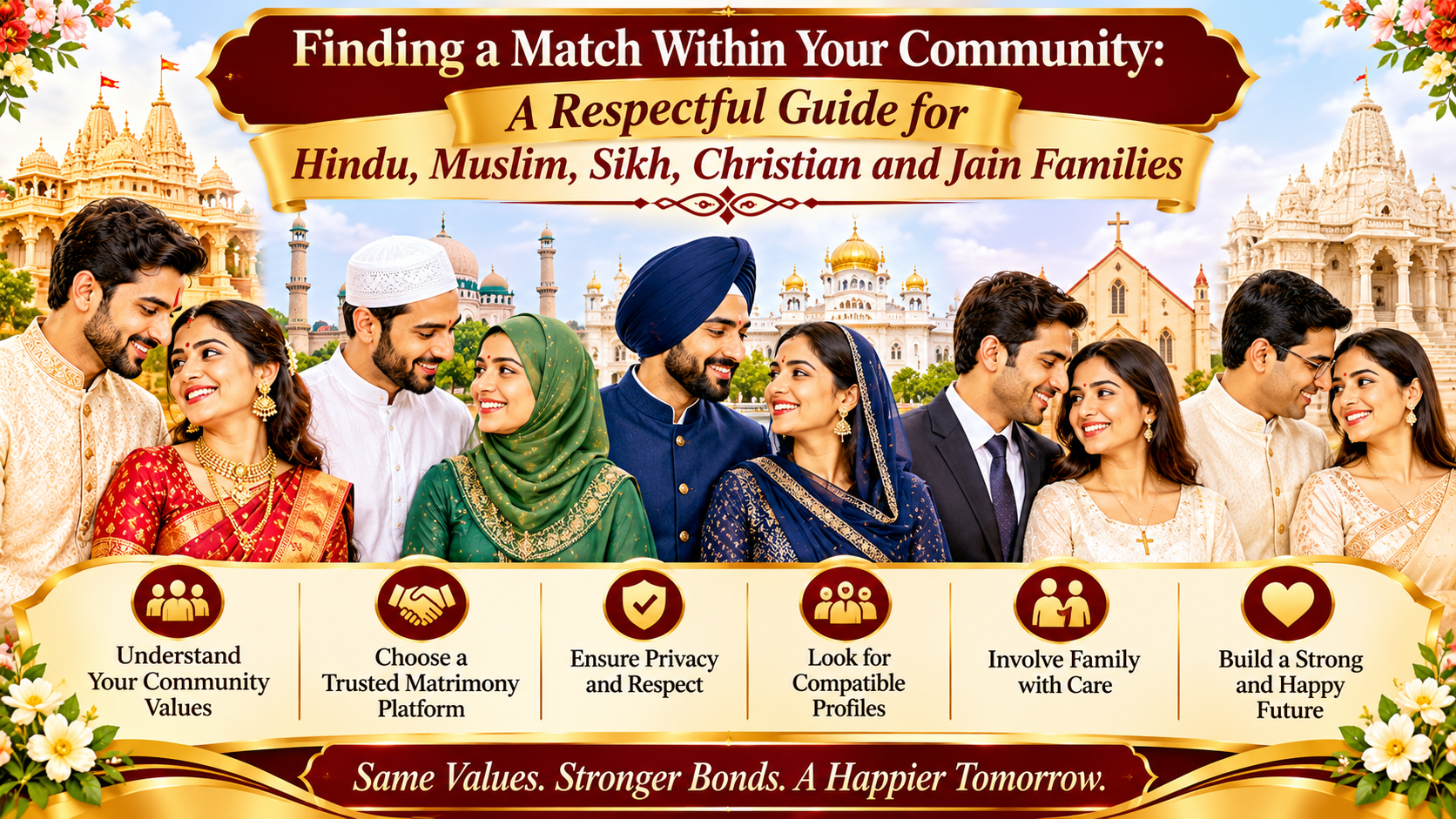
In India, marriage is often a union of families as much as individuals, and shared faith, language and customs are important to many of them. Searching within your community can bring comfort, common values and easier family bonding. It also comes with its own questions about tradition, expectations and personal choice. This guide helps you approach the process thoughtfully.
Why families choose community matches
Shared festivals, food habits, rituals and family values reduce the need for explanation and adjustment. Elders feel more at ease when the couple follows familiar traditions, and community networks often provide trusted introductions. For people living away from their hometown, a community match can also keep cultural roots alive in the next generation.
Understand what "community" means to you
The word can mean different things. For some it is religion, for others it includes sect, sub-community, language or region. A Sikh family may care about Amritdhari or non-Amritdhari practice. A Christian family may specify denomination. A Jain family may ask about sect and dietary practice. A Muslim family may consider sect and school of thought, and a Hindu family may look at language, region or gotra. Decide which of these are essential and which are flexible, and state them clearly in your profile.
Use community networks wisely
Community associations, religious institutions, family elders and community gatherings are traditional sources of introductions. Online platforms also let you filter by religion, sub-community and language. Combine both. A referral from a respected elder adds trust, while online search broadens your reach beyond your immediate circle.
Respect customs and practices from the start
Ask about practices that matter in daily life: dietary rules, prayer routines, festival observance, dress expectations and attitudes towards participation in rituals. Discuss these early and respectfully. Differences within the same community are common, and a conversation helps both families understand what is realistic.
Language and regional factors
Shared mother tongue helps communication with extended family and supports children's connection with their heritage. If you consider someone from a different region of the same community, discuss language, food, and customs openly, and consider how comfortable each person will be in the other's family setting.
Involving elders and managing expectations
Elders may have strong views about family background, reputation and customs. Listen with respect, and explain your own priorities calmly. Many families find that the most workable approach is for elders to guide the shortlist while the individuals meet and decide for themselves. Keep conversations about expectations transparent and avoid making promises that you cannot keep.
Balancing tradition and personal compatibility
Being from the same community does not guarantee compatibility. Two people from the same background may differ greatly in values, ambitions or temperament. Assess compatibility through honest conversations about career, finances, family responsibilities, living arrangements and long-term goals. A strong match respects both shared tradition and individual character.
If you are open to marrying outside your community
Some families and individuals are open to inter-community or inter-faith marriages. If this applies to you, begin early conversations with your family, understand the legal framework, and consider how rituals, children's upbringing and religious practice will be handled. Respect for both families' sentiments helps ease the transition.
Staying safe while searching
Community connections can create a false sense of trust. Verify identity, education, employment and marital status even for matches introduced by acquaintances. Do not send money or share sensitive documents before you are confident about the person and family.
Practical tips
- Be clear about which community factors are essential
- Use both online and offline networks
- Ask about daily practices, not only labels
- Keep the conversation respectful on every topic
- Verify details independently
Final thoughts
Community matrimony works best when tradition and personal choice complement each other. Honour the values that matter to your family, remain open to understanding the person in front of you, and make decisions based on respect, honesty and genuine compatibility.
Frequently asked questions
1. Is it necessary to marry within the same community?
No law requires it. It is a personal and family choice. Many people value it for cultural comfort, while others choose partners across communities.
2. How do I search for matches in a specific sub-community or sect?
Use filters on matrimony platforms, approach community associations and ask trusted relatives. State your sub-community preference clearly in your profile.
3. What if my family and I disagree about community requirements?
Talk openly about why each of you holds your view. Look for flexibility on non-essential factors and consider involving a trusted elder as a mediator.
4. Does the same community ensure a successful marriage?
Not automatically. Shared background helps, but communication, respect and compatibility in values matter more.
5. Is inter-community marriage legally allowed in India?
Yes. Adults can marry across religions or communities, and laws such as the Special Marriage Act, 1954 provide a framework. Consult a lawyer for your specific situation.